The Masters We Didn't See: Why CBS's Sunday Coverage Left Fans Wanting
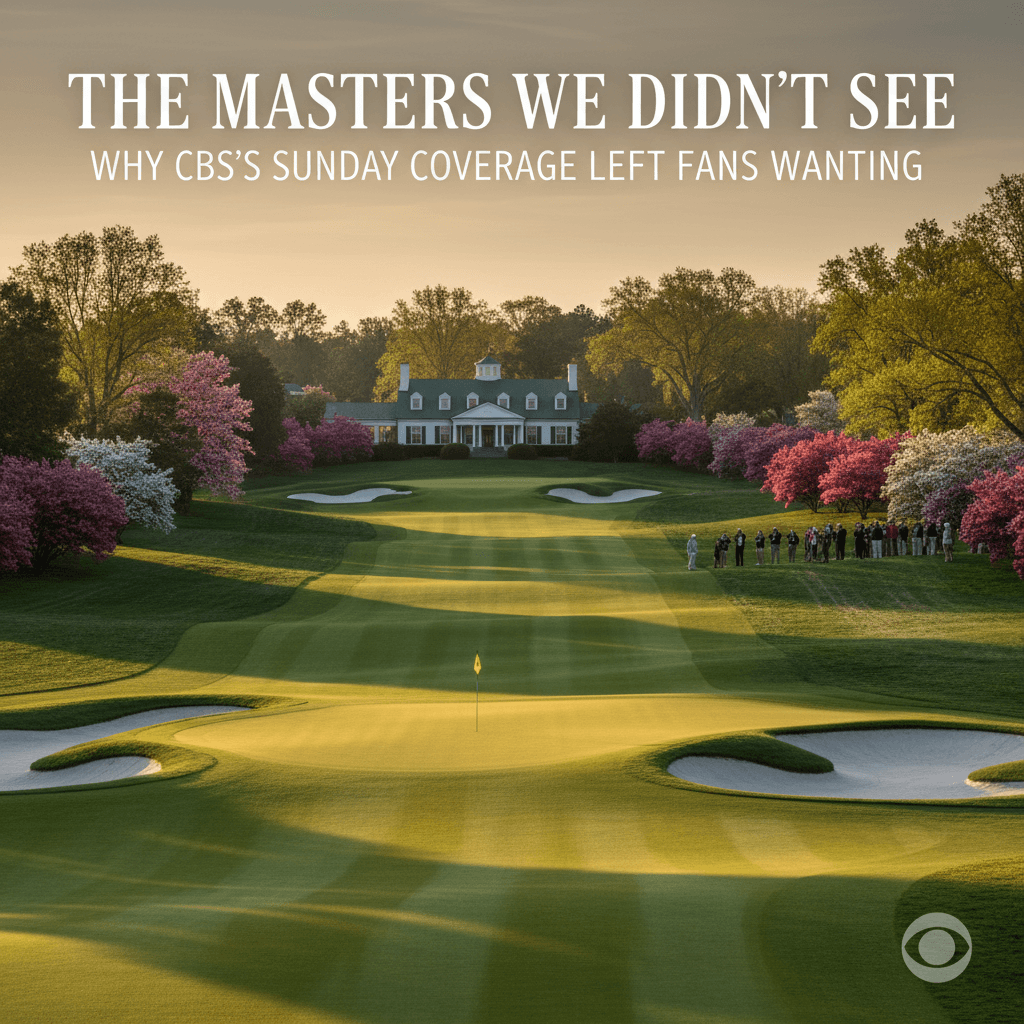
There's a particular magic to Masters Sunday. The shadows lengthen across Augusta National's cathedral pines, the roars cascade from Amen Corner to the 18th green, and somewhere in your living room, you're supposed to feel every single heartbeat of it. This year, that connection felt severed—and fans across the country let CBS know it.
A Day of Drama, Poorly Served
I've watched Masters coverage from a hotel room in Scotland, a sports bar in Tokyo, and my grandmother's farmhouse in Vermont. The setting changes, but the expectation remains: on Sunday at Augusta, you surrender to the broadcast. You trust it to show you the pivotal moments, the unlikely heroes, the crushing defeats. This year, that trust was tested.
Social media became a pressure valve for frustrated viewers throughout the final round. The complaints were consistent and widespread: too few shots shown, coverage lagging behind the live action, and a strange reluctance to follow compelling storylines as they unfolded on the course.
The Shots We Missed
Golf broadcasting is an impossible art. With play spread across 18 holes and multiple groups in contention, directors face difficult choices every minute. But the frustration this year wasn't about those inevitable trade-offs—it was about a pattern of absence.
Fans reported missing crucial approach shots, learning about birdies only through crowd noise or graphics, and watching too many replays while live drama unfolded elsewhere. In an era when Augusta National's own app and digital coverage provide shot-by-shot tracking, the main broadcast felt oddly disconnected from the tournament's pulse.
The pacing felt off, too. Masters Sunday should build like a symphony—quiet passages giving way to crescendos as the final groups navigate the back nine. Instead, many viewers described a disjointed experience, lurching between moments without the narrative thread that makes golf television compelling.
The Broadcast Challenge at Augusta
It's worth acknowledging the unique constraints CBS faces at Augusta National. The club maintains strict control over its presentation, from camera placements to commercial integration. Unlike other major championships, the Masters has always been curated—and that curation extends to the broadcast.
But those constraints have existed for decades, and we've seen masterful coverage under the same conditions. The legendary calls, the perfectly timed cutaways to history being made—these aren't accidents. They're the product of preparation, intuition, and an understanding that the audience at home deserves to feel present at the tournament.
This year, something in that equation felt miscalculated.
What Modern Fans Expect
The golf audience has evolved. We've grown accustomed to Featured Group coverage on streaming platforms, shot trackers that follow every ball in flight, and multiple camera angles available at our fingertips. When the main broadcast can't match the immediacy of a Twitter feed, there's a problem.
This isn't a call for Augusta to modernize against its traditions—the Masters' careful presentation is part of its mystique. But within that framework, the fundamental job of television is to show us the golf. On Sunday, too many fans felt like they were hearing about a tournament rather than watching it.
The Weight of the Moment
What makes this particularly frustrating is the stakes. Masters Sunday isn't just another day of golf coverage—it's one of the most-watched sporting events of the year. Casual fans tune in. Families gather. For some viewers, it's their only golf broadcast of the year.
Those viewers deserved to see the drama unfold in real time. They deserved to understand why the roars were building, to follow the players who were charging and those who were faltering. Instead, many were left piecing together the narrative from social media while the broadcast played catch-up.
Takeaway
A great golf broadcast makes you feel the weight of every putt, the tension of every tee shot. It trusts the game to tell its own story and gets out of the way. This Masters Sunday, that trust felt broken. CBS and Augusta National have months to reflect before next April—and a lot of goodwill to rebuild with an audience that simply wanted to see the golf we all showed up for.