The Costly Ball-Mark Blunder That May Keep Adam Svensson From Shinnecock
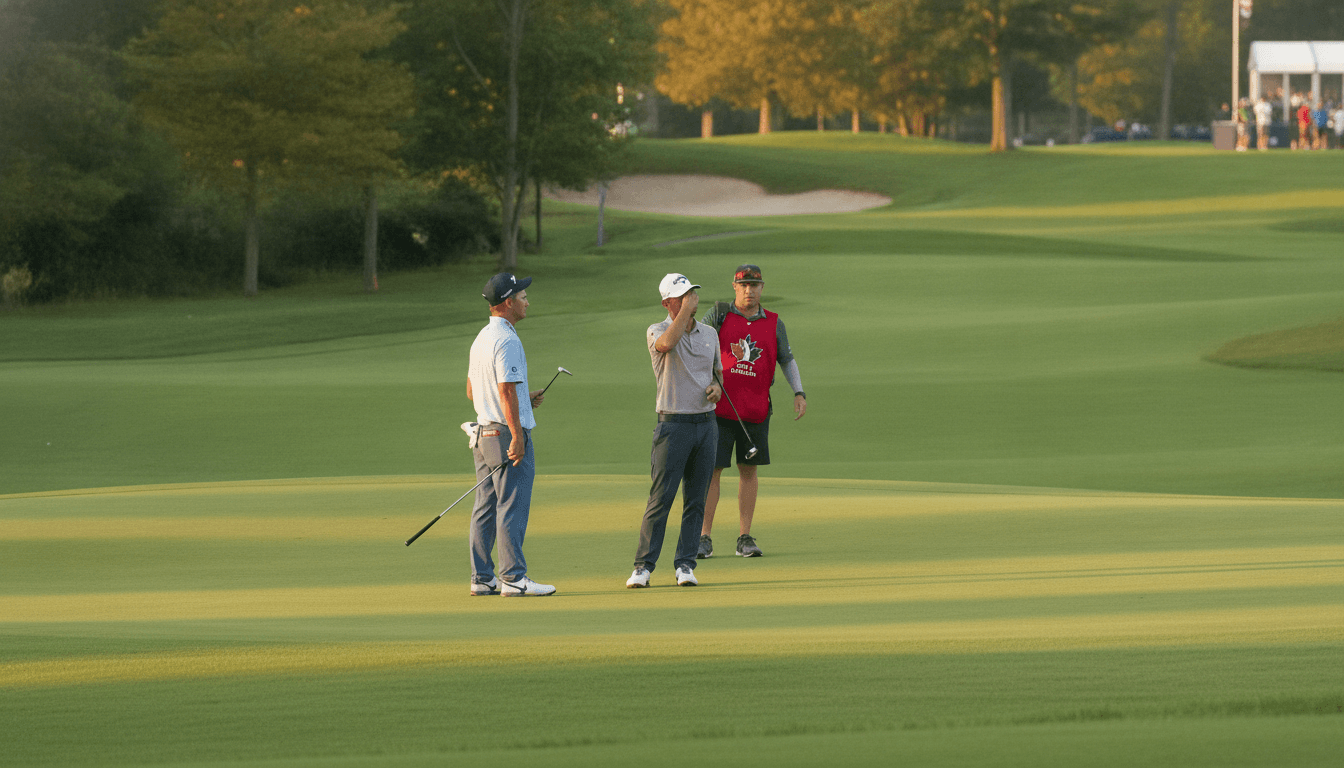
There's a particular kind of heartbreak that only golf can deliver. It doesn't come from a skulled bunker shot or a lip-out on eighteen. It comes from the quiet moments—the procedural lapses, the mental drift when the pressure has squeezed every last drop of focus from your mind. On Monday, at Lambton Golf & Country Club in Toronto, Adam Svensson experienced exactly that kind of devastation.
Golf's Longest Day Lives Up to Its Name
The 2026 U.S. Open Final Qualifying—affectionately known as "Golf's Longest Day"—unfolded across ten sites in the United States, Canada, and England. The prize: a coveted tee time at Shinnecock Hills, that windswept cathedral on Long Island's South Fork where the third major of the year will be contested.
At Lambton, six spots were on the line. Emiliano Grillo cruised to medalist honors at nine under, with Alejandro Tosti (eight under) and Marcelo Rozo (seven under) claiming the next two positions comfortably. But behind them, chaos reigned. Eight players finished deadlocked at six under, setting up one of those sprawling sudden-death playoffs that turn stomachs and make legends.
A Playoff of Attrition
William Mouw birdied the first extra hole to punch his ticket, while two players—including the popular Max Homa—made bogey and saw their dreams dissolve into the Toronto evening. Five remained. John Parry claimed the fifth spot with another birdie on the following hole, and another contender fell away with a bogey.
That left three men standing: Svensson, Matt Wallace, and Max McGreevy. One official spot remained, plus the all-important alternate positions. The first alternate traditionally has a legitimate shot at making the field when players withdraw. The second alternate? That's hope dressed in formal attire, rarely invited to dance.
The Moment Everything Changed
On the green of the third playoff hole, the sequence felt routine. Wallace finished with a par. Svensson, safely on the putting surface with a look at par himself, marked his ball to allow McGreevy to putt first—standard etiquette, standard procedure.
McGreevy rolled his putt into the heart of the cup. Birdie. The sixth and final U.S. Open spot was his.
And then Svensson made the kind of mistake that haunts you at 3 a.m. for months afterward. In a moment of mental fog—perhaps relief that the agonizing playoff had finally concluded, perhaps simple confusion—he picked up his ball marker.
The playoff wasn't over.
With Wallace already in for par, Svensson still needed to hole his own par putt. Not for a spot in the field, no—that ship had sailed the moment McGreevy's ball disappeared. But for the first alternate position, which historically means everything versus meaning nothing.
What the Rules Demand
Under the Rules of Golf, picking up a ball marker without completing the hole carries consequences. It's the kind of procedural misstep that feels impossibly cruel in context—a formality that transforms into a guillotine when you're operating on fumes after 36 holes plus playoff pressure.
The video from Golf Channel shows the moment Svensson is informed of his error, and it's difficult to watch. You see the realization wash over him, the understanding that a single reflexive action may have cost him any realistic chance of walking those storied Shinnecock fairways.
The Weight of What Could Have Been
Lambton Golf & Country Club is a beautiful, historic track—the kind of place where you can feel Canadian golf's deep roots in every rolling fairway. But on Monday, it became a stage for the game's most unforgiving theater. Svensson, a PGA Tour professional who has experienced the highest levels of competition, was undone not by a bad swing but by a lapse lasting perhaps two seconds.
"Big mistake," the headlines declared. Those words feel inadequate. This was the kind of mistake that separates golf from other sports—a mental error in a moment of stillness, when the ball isn't even in motion. There's no defender to blame, no unlucky bounce. Just a hand reaching down when it shouldn't have.
The Takeaway
Golf's cruelty lies not in its difficulty but in its precision. Every stroke counts, yes—but so does every procedure, every marker replaced, every ball properly addressed. Adam Svensson played well enough over 36 holes to earn a playoff spot. He held himself together through three sudden-death holes of extraordinary pressure. And then, in a moment of assumed finality, he let his guard down. Shinnecock Hills may have to wait another year.