The Saudi Sunset: What LIV's Funding Crisis Means for Golf's Landscape
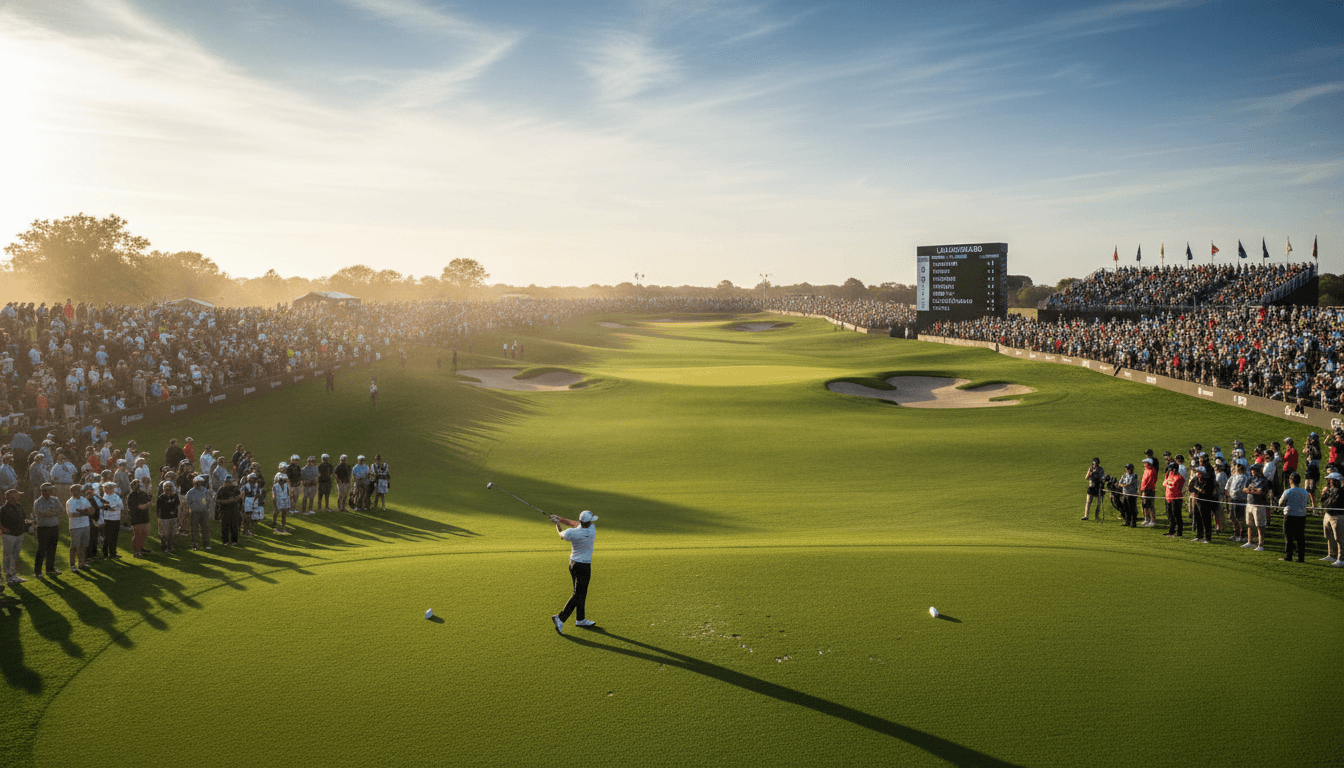
There's a particular feeling you get standing on certain courses—the sense that you're witnessing something that won't last forever. I felt it walking the grounds of a LIV event last year, watching former major champions compete for enormous purses while knowing, somehow, that the whole enterprise carried the weight of impermanence.
Now that intuition appears validated. LIV Golf executives are preparing to deliver news that will reverberate through every clubhouse, practice facility, and tour headquarters in professional golf: Saudi Arabia's funding of the circuit will cease at the end of 2026.
The $5 Billion Experiment Reaches Its Conclusion
The Saudi Public Investment Fund has poured more than $5 billion into LIV Golf since its controversial launch. That's an almost incomprehensible figure—enough to build dozens of world-class courses, fund generations of junior development, or reshape the infrastructure of the game entirely. Instead, it went toward guaranteed contracts, 54-hole shotgun starts, and a wholesale challenge to golf's established order.
The shift in approach reportedly came during meetings in New York following this month's Masters. Yasir al-Rumayyan, the PIF governor who championed LIV from its inception, is no longer understood to be playing a key role in the tour's future. Instead, Saudi Arabia's crown prince has insisted on a broader strategic shift that directly affects LIV's dependency on PIF funding.
The conflict in the Middle East has been cited as at least part of the reasoning. Whatever the full calculus, the outcome is stark: without an alternative funding source, LIV in its current form faces closure just four years after staging its first tournament.
Major Winners in Limbo
Consider the roster of talent now facing profound uncertainty. Jon Rahm. Bryson DeChambeau. Cameron Smith. These are major champions who signed contracts collectively worth hundreds of millions of dollars. They traded the established pathways of professional golf for unprecedented financial security and a different competitive model.
Now their agents are likely already working the phones. The immediate question players will want answered: Are they permitted to walk away from their LIV contracts and begin negotiations for a return to the PGA Tour?
LIV CEO Scott O'Neil was publicly bullish during a recent tournament but notably vague about finances beyond 2026. He had reportedly hoped to convince the PIF to retain faith with the project. That hope appears to have faded. O'Neil is expected to hold meetings with players and staff, outlining the PIF reversal and the obvious financial void it creates.
The PGA Tour's Strengthened Hand
Here's where golf's landscape gets particularly interesting. The PGA Tour, which spent years scrambling to respond to the LIV threat, now finds itself in an increasingly strong bargaining position. Any negotiations with returning players will be complicated by a fundamental tension: the Tour must apply reasonable sanctions to satisfy members who remained loyal during the fracture.
These weren't just business decisions. They were deeply personal choices that divided friendships, altered career trajectories, and fundamentally changed how players viewed their relationship with the sport's institutions. Welcoming back LIV defectors with open arms would feel like a betrayal to those who stayed.
Yet the Tour also wants its best players competing in its events. The calculus of punishment versus entertainment value will be fascinating to watch unfold.
The Schedule Already Showing Cracks
The immediate future looks uncertain. LIV Golf Virginia is still scheduled for next week at Trump National Golf Club northwest of Washington DC. But a planned stop in Louisiana in June has already been postponed, with the state seeking return of $1.2 million in incentive funds.
These logistical hiccups feel like harbingers. When the money stops flowing, the infrastructure crumbles quickly.
A Course Writer's Takeaway
I've always believed that golf courses outlast the controversies played upon them. The layouts that hosted LIV events will remain long after the tour logos are removed. The game itself will continue—it always does.
But for the players who bet their careers on Saudi backing, for the executives who built something genuinely disruptive, and for fans who simply wanted to watch great golf regardless of which entity organized it, the coming months will be turbulent.
Golf's great disruption is approaching its messy finale. Whatever emerges from this reckoning, the sport's landscape will never look quite the same.