The Prodigal Sons: What LIV's Uncertain Future Means for Golf's Landscape
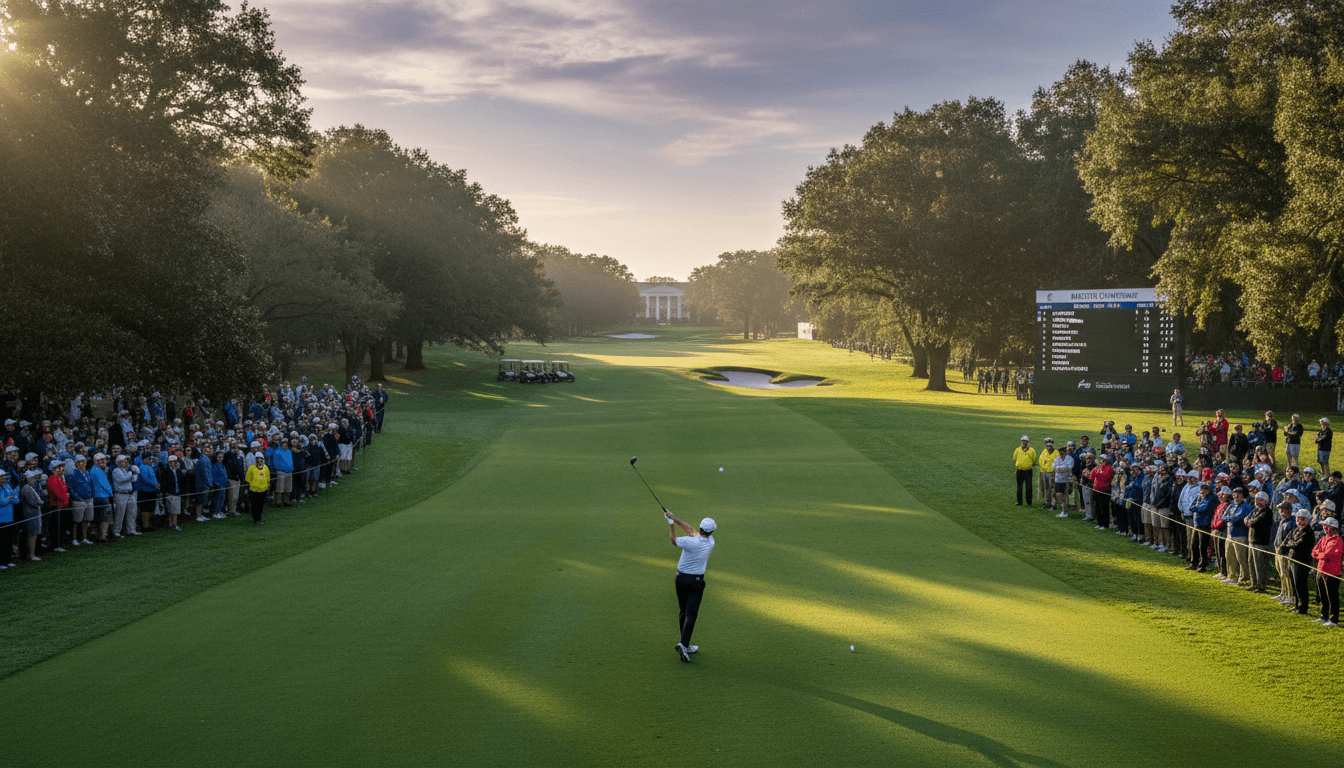
A Shifting Wind at Quail Hollow
There's a particular quality to the light at Quail Hollow in early May—soft and promising, the dogwoods still holding their last blooms while the azaleas have long since faded. It was in this setting that Rory McIlroy, four shots off the lead at the Truist Championship, offered what might be the most significant olive branch in professional golf's fractured modern era.
"That's just good business practice," McIlroy said of potentially welcoming LIV Golf defectors back to the PGA Tour. Coming from a man who has been among the breakaway circuit's fiercest critics, the words carried weight beyond their simple pragmatism.
The Saudi Exit and Its Ripple Effects
The landscape shifted dramatically in April when Saudi Arabia's Public Investment Fund announced it would withdraw its multibillion-dollar backing of LIV Golf at year's end. For a circuit that was built entirely on the premise of unlimited sovereign wealth fund money, this represented an existential threat of the highest order.
LIV's response—a "strategic evolution" featuring a newly established independent board and a search for replacement investors—has been met with skepticism from many corners of the golf world. McIlroy captured the sentiment with characteristic directness: "When one of the wealthiest sovereign wealth funds in the world thinks that you're too expensive for them, that sort of says something."
The math is difficult to argue with. If PIF, with its nearly $1 trillion in assets, couldn't justify the continued expense, who could?
The Players' Dilemma
What strikes me most about this moment isn't the corporate maneuvering—it's watching players navigate an uncertain future they didn't quite anticipate when they signed those massive guaranteed contracts.
Bryson DeChambeau, ever the unconventional thinker, has already outlined his contingency plan: focus on growing his YouTube channel and "play tournaments that want me" if LIV doesn't survive. It's a thoroughly modern solution from a player who has always charted his own course.
Meanwhile, the returning member program has already drawn Brooks Koepka, the five-time major champion, back to the PGA Tour. Jon Rahm has struck a deal to continue playing on the DP World Tour, ending what had been described as a "stand-off." Eight other players, including England's Tyrrell Hatton, have agreed terms with the DP World Tour that allow them to continue playing LIV events without sanctions—provided they commit to at least six European tour events.
McIlroy's Evolution
Perhaps the most telling aspect of McIlroy's comments was his admission of personal growth: "I was probably too judgemental with the guys that went because I was seeing it from my point of view and maybe not seeing it from other points of view."
This is a meaningful concession from someone who took the departures personally, who saw them as a betrayal of the tour that had made them all wealthy and famous. The Northern Irishman has always worn his heart on his sleeve—it's what makes him such a compelling figure—and watching him find space for empathy speaks to a maturity that extends beyond his six major championships.
PGA Tour chief executive Brian Rolapp has apparently set the tone from the top: anything that makes the tour stronger, anything that makes the DP World Tour stronger, should be considered. It's a stance that prioritizes the health of professional golf over the satisfaction of settling scores.
What Comes Next
McIlroy was careful not to declare LIV dead and buried. "It doesn't mean that LIV is going to go away," he noted. "They're going to go and try and find alternative investment, whatever that may look like."
This uncertainty is perhaps the most fascinating element of the current moment. Golf's civil war may be ending not with a dramatic treaty signing but with a gradual, market-driven reconciliation—players drifting back one by one, tours finding accommodation, the old order reasserting itself through sheer institutional gravity.
The Takeaway
- Saudi Arabia's PIF withdrawal has created genuine uncertainty about LIV Golf's long-term viability
- McIlroy and PGA Tour leadership appear open to welcoming back LIV defectors under the right circumstances
- Several high-profile players have already found pathways back to the traditional tours
- The next twelve months will likely determine whether golf's great schism heals or hardens into permanence