When the Ropes Can't Hold Back the Noise: McIlroy's Heated Exchange at Aronimink
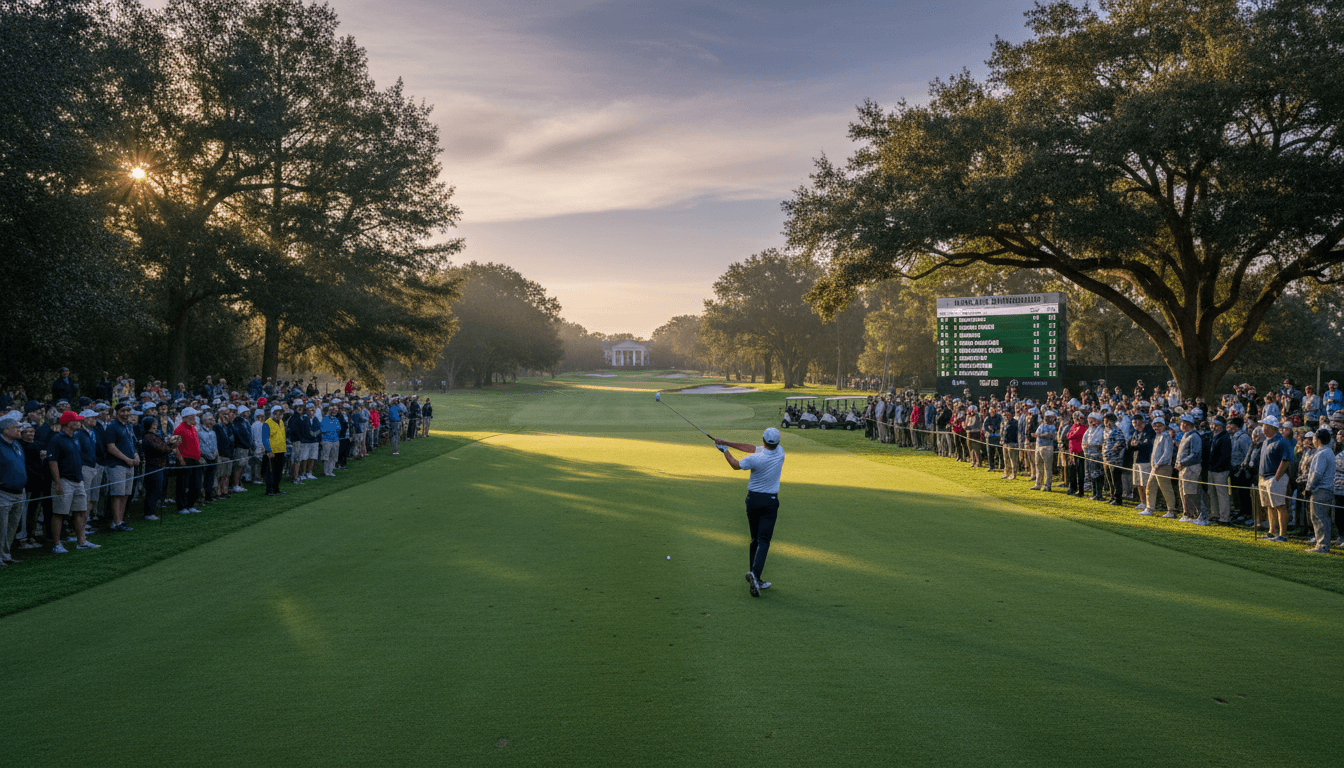
There are moments on a golf course when the silence feels sacred—the held breath before a crucial putt, the quiet rustle of gallery ropes as thousands lean in to witness something extraordinary. And then there are moments when that sanctity shatters, leaving us to reckon with the uncomfortable truth that professional golf, for all its traditions of decorum, exists in an increasingly hostile soundscape.
Sunday at Aronimink Golf Club delivered one of those moments.
A Delicate Shot, A Crude Response
Rory McIlroy entered the final round of the PGA Championship three shots off the lead, positioned among the favorites with a legitimate chance to capture his fifth major title. The arithmetic was simple: make a run on the back nine, apply pressure, see what happens.
What happened instead was a masterclass in frustration. McIlroy birdied the 2nd hole, then proceeded to par ten consecutive holes while watching his chances slowly evaporate. A bogey on 13—a drivable par-4 that should have yielded birdie—felt like a knife twist. He answered with a birdie on 14, but by the time he reached the par-5 16th, he trailed by three with running room disappearing fast.
From 37 yards out in the rough, short-sided with a bunker to clear, McIlroy faced exactly the kind of shot that separates good rounds from great ones. His pitch landed above the bunker but kicked back into the sand—a cruel bounce that drew groans from the gallery.
And then, cutting through the disappointment: "U-S-A!"
McIlroy's response was immediate and unmistakable. The CBS broadcast captured him staring in the direction of the heckler, appearing to tell him to "shut the f— up" before pointing his wedge toward security, directing their attention to the offender.
The Weight of Accumulation
Context matters here. This wasn't the first "U-S-A!" chant McIlroy heard during his time at Aronimink. For a Northern Irish player who has represented Europe in the Ryder Cup with passionate intensity, these nationalistic taunts carry particular sting—especially after what he and his wife endured at Bethpage Black during the 2024 Ryder Cup, verbal abuse so severe that the PGA of America CEO issued a formal apology.
The cumulative effect of such treatment cannot be overstated. Players like McIlroy don't exist in isolated moments; they carry the weight of every insult, every cheap shot shouted from the safety of a crowd, every reminder that some spectators come not to celebrate golf but to antagonize.
McIlroy, to his immense credit, got up and down from that bunker to save par. He finished with a 69, four under for the championship, tied for 7th—five shots behind winner Aaron Rai.
The Course Deserved Better
Aronimink is a Donald Ross gem, restored and refined to championship standards. Its rolling terrain outside Philadelphia demands precision and creativity. It's the kind of venue where you want the golf to speak loudest, where the drama should emerge from the interplay between player and course, not from someone who paid for a ticket and mistook it for a license to harass.
McIlroy's post-round assessment focused on the golf itself: the missed opportunities on both par-5s, the bogey on 13 that turned what could have been a special Sunday into an exercise in managing disappointment. "If I birdied the two par-5s and turned that 5 into a 3 on 13, the day looks very different," he noted.
He's right. But so too would his experience have looked different if a minority of fans understood that witnessing world-class golf is a privilege that comes with responsibilities.
Looking Ahead
McIlroy plans to take the next couple of weeks off before competing at the Memorial at Muirfield Village. The U.S. Open at Shinnecock Hills looms in mid-June, another major championship at another storied American venue where the crowds will be massive and the atmosphere charged.
One hopes the galleries there will remember what they're watching and why they came. Golf's intimacy—the proximity between player and spectator—is one of the sport's great gifts. It should not become a weapon.
Takeaway
McIlroy's confrontation at Aronimink speaks to a growing tension in professional golf between access and accountability. The best venues in the world deserve galleries that match their standards. Rory McIlroy has earned the right to compete without being taunted. Both of these things should be obvious. Increasingly, they need to be said aloud.