Michelle Wie West's Riviera Farewell: Finding Peace Where Pressure Once Lived
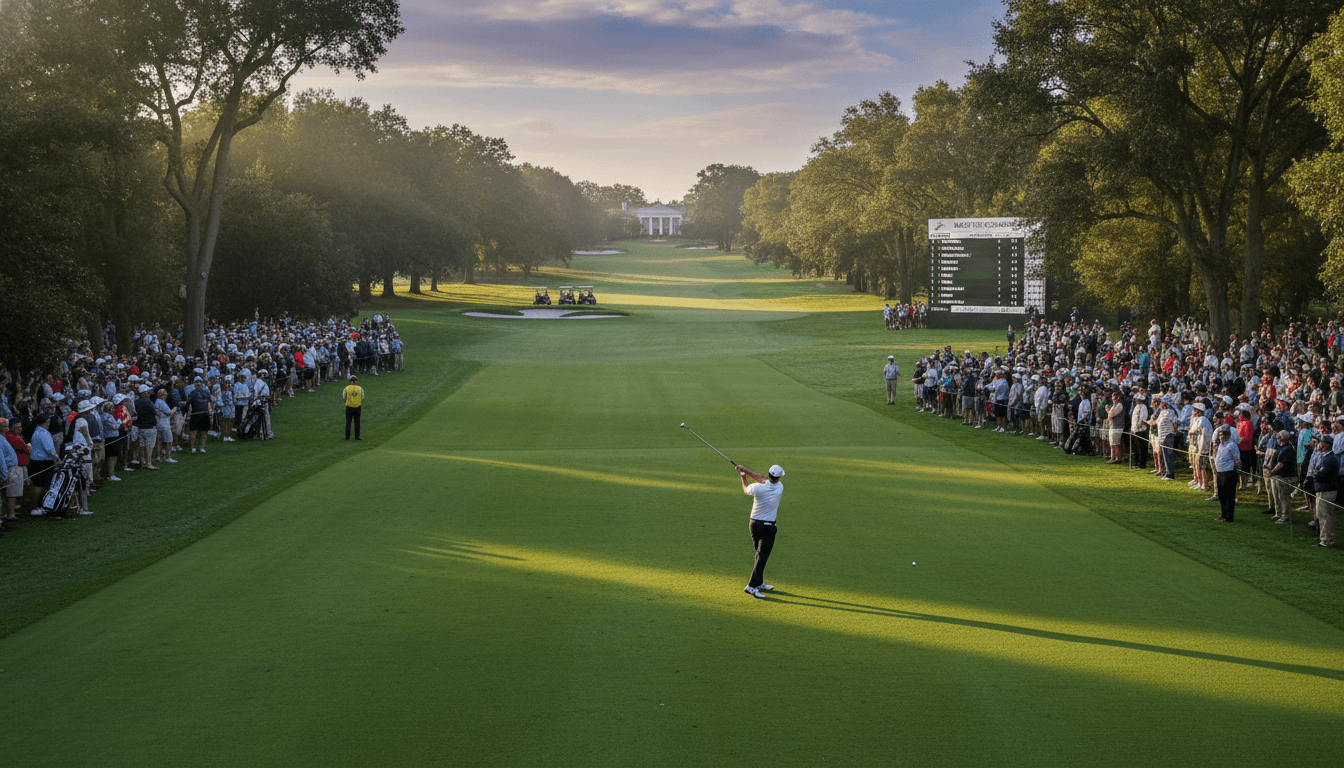
There's a particular quality of light at Riviera Country Club in the late afternoon—golden, cinematic, the kind that makes everything feel like the closing scene of something important. On Friday, as Michelle Wie West signed her final scorecard of competitive golf, that light seemed almost conspiratorial in its timing.
The Rarity of a Clean Exit
Golf doesn't release its champions easily. The sport has a peculiar way of keeping its hand on the necks of its heroes, beckoning them back for one more major, one more walk over the Swilcan Bridge, one more chance to feel what they once felt. The Champions Tour exists for this reason. The senior majors. Jack Nicklaus giving press conferences in Ohio decades after his prime.
This is what makes Michelle Wie West's departure so striking. She is done done, as she put it. Not semi-retired. Not testing the waters. Finished, with the kind of peace that most professional golfers never find.
Her final round at Riviera was a four-over 75, giving her a 36-hole total of seven over par. She missed the cut by a comfortable margin, and nobody expected otherwise. Her long game showed flashes of the player who once captivated us as a teenage prodigy, but the putter stayed cold. None of that mattered.
What She Came For
"It's fun to just hit shots under pressure," Wie West said after signing off. "You don't feel pressure—I don't feel pressure in my normal life. There's really nothing I do that recreates this, so it was fun to feel it again."
There's wisdom in those words that transcends golf. She returned not to prove anything, not to chase a number, but to feel the feels again—that mystical tenseness that professional golfers seem to crave like oxygen. And having felt it, she was content to let it go.
I've walked hundreds of courses across six continents, and I've watched countless players struggle with the narrowing path that comes at the end of a career. The route forward seems impossibly wide during anyone's prime, but it contracts quickly as the body changes and the competition intensifies. Dealing with that transition gracefully is one of the hardest things in sport.
The Contrast
Consider Lexi Thompson, who has complicated the very idea of retirement by placing "semi" in front of it. She expressed longing to be at Riviera this week, competing in what would have been her 20th U.S. Women's Open. Yet she chose not to go through Final Qualifying. The ambivalence is palpable, the struggle visible.
Wie West, by contrast, made her peace years ago. She competed just once since her emotional farewell at Pebble Beach in 2023—at last month's Mizuho Americas Open, which she hosts in New Jersey—failing to break 80. She skipped Lancaster in 2024. She passed on Erin Hills in 2025. She simply wasn't interested, didn't need to be.
A Victory Lap Worth Taking
That 2014 U.S. Women's Open victory at Pinehurst gave her a decade of exemptions, and she stretched them as far as they would go. But not out of desperation—out of timing. The 2026 championship at Riviera, one of golf's most storied venues, offered the perfect backdrop for a final bow.
After her round, she signed autographs, conducted interviews, chatted with friends, and simply hung out, unhurried. There was no rush to escape, no visible anguish about what was ending. Just a woman who had made peace with a sport that once dominated—and at times roiled—her life.
The Takeaway
Professional golf is littered with champions who can't stop coming back, who chase the feeling long past the point of diminishing returns. Michelle Wie West found something rarer: the ability to return, feel what she needed to feel, and walk away satisfied. In a sport that rarely lets go of its heroes, she managed to let go first. That might be her most impressive accomplishment yet.