The Clock Is Ticking: Why Public Pace Data Could Transform Golf Forever
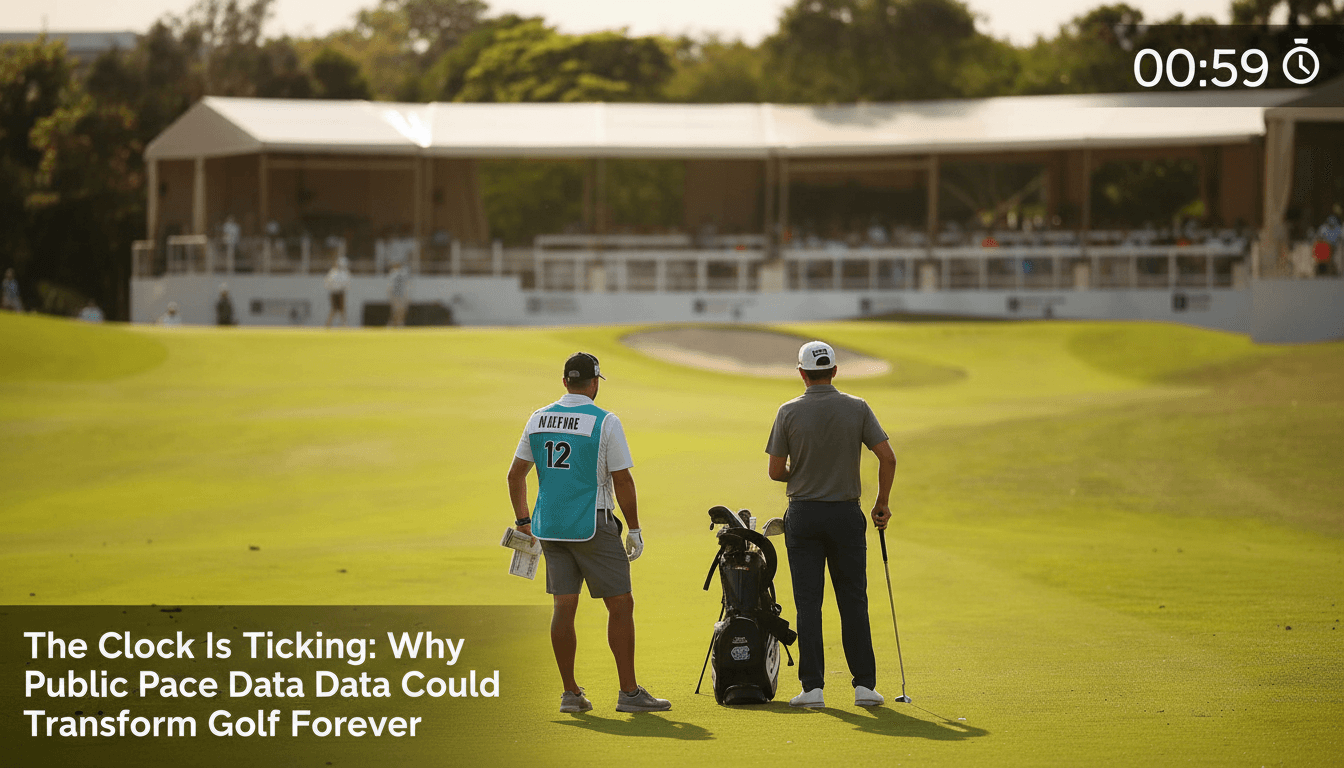
I've stood in countless gallery ropes over the years, watching the world's best golfers do extraordinary things with a golf ball. But I've also stood there watching them do very little at all—studying lines from seventeen angles, backing off shots, conferring endlessly with caddies while the afternoon shadows stretched long across the fairway.
We've all felt it. That creeping frustration. The sense that something beautiful is being diluted by hesitation. And now, finally, the PGA Tour is doing something genuinely bold about it: they're going to tell us exactly who's slow.
Transparency Arrives on the Korn Ferry Tour
Starting next month, following the Colonial Life Charity Classic (May 14-17), speed-of-play statistics for Korn Ferry Tour players will become public for the first time. This isn't some vague initiative or committee promise—this is real data, appearing on player profiles and stat pages for anyone to see.
The decision came from the PGA Tour Policy Board back in November, and while players have had private access to their own stroke-time data throughout 2026, the rest of us are about to join the conversation. Tournament-specific timings, season averages, shot-type breakdowns—it's all coming into the light.
Think about that for a moment. We'll be able to see not just that a player is slow, but where they're slow. Does someone labor over approach shots? Take forever on the tee? The data will tell us.
Why the Korn Ferry Tour First?
There's wisdom in testing these waters on the feeder circuit before rolling it out to the game's biggest names. The Korn Ferry Tour serves as a proving ground for more than just future PGA Tour stars—it's now a laboratory for how transparency might reshape professional golf's relationship with pace.
The four stated objectives, as outlined in a recent memo to players, are telling. The Tour wants to provide "competitive context to fans," create "positive storylines," correct "inaccurate information" about players labeled as slow, and—perhaps most importantly—be "informative to the slowest players and monitor any changes."
That last point is key. This isn't purely about naming and shaming. It's about accountability through visibility. When your data is public, when fans and sponsors can see exactly how long you take over a six-foot putt, behavior tends to adjust.
A Promise Finally Kept—Mostly
If you've been following this storyline, you might recall Jay Monahan declaring at the 2025 Players Championship that speed-of-play stats would arrive for the PGA Tour by year's end. That didn't happen. Like many initiatives emerging from Ponte Vedra Beach lately, implementation took longer than promised.
But here we are, thirteen months later, with the Korn Ferry Tour serving as the bridge between aspiration and reality. The ShotLink system—that marvel of golf technology that tracks every shot—makes all of this possible, offering granular data that would have been unthinkable even a decade ago.
What This Means for the Game We Love
I've played fast my whole life. Not because I'm virtuous, but because I find rhythm in brisk play—the walk, the assessment, the swing, the walk again. When that rhythm breaks, the magic of a round dissipates. Television audiences feel it too. There's a reason ratings discussions often circle back to pace.
But here's what excites me most: this initiative could finally separate perception from reality. We've all assumed certain players are slow based on broadcast snippets or social media chatter. Now we'll know. And for players who've been unfairly maligned, the data becomes their defense.
The fastest players will also get their moment. Imagine leaderboards that celebrate not just scores but tempo—the golfers who move with purpose, who trust their preparation, who respect the field behind them. That's a storyline worth telling.
The Takeaway
The PGA Tour is betting that transparency will accomplish what decades of vague warnings and occasional penalties could not: a genuine cultural shift toward faster play. Starting on the Korn Ferry Tour is smart strategy—low risk, high information value. But make no mistake: this is coming to the main stage eventually.
When it does, we'll finally have the data to match our frustrations—or to discover that some of our assumptions were wrong all along. Either way, the clock is now visible to everyone. And that changes everything.