Shinnecock Hills: Where Golf History Meets Modern Championship Challenge
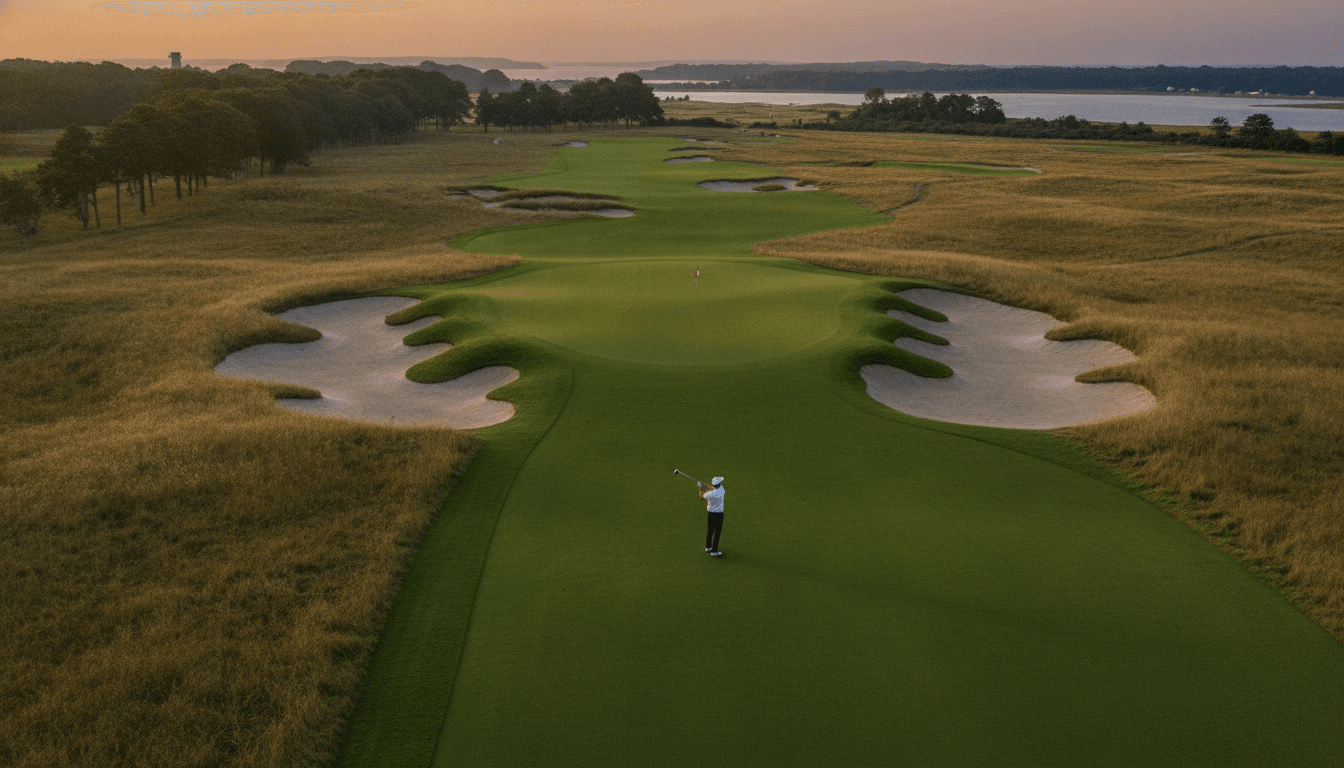
A Course That Earns the Word "Great"
I've tested equipment on hundreds of courses over the years, and I've learned that the word "great" gets thrown around far too casually in golf. But when you're talking about Shinnecock Hills Golf Club in Southampton, New York — the venue hosting this week's 126th US Open — that descriptor actually fits.
This isn't just another championship venue. Shinnecock is hosting its sixth US Open, with previous editions coming in 1896, 1986, 1995, 2004, and 2018. That kind of pedigree speaks for itself.
The Numbers That Matter
For those of us who like to quantify difficulty, Shinnecock delivers sobering statistics:
- Total max length: 7,440 yards
- Par: 70
- Course rating: 76.9
- Slope rating: 146
That course rating of 76.9 tells you everything you need to know. For context, a scratch golfer is expected to shoot nearly seven strokes over par on a standard round here. The slope rating of 146 indicates this course punishes mistakes severely — higher handicappers will find the challenge exponentially greater.
135 Years of Design Evolution
What makes Shinnecock particularly fascinating from a design perspective is its layered history. The course opened in 1891 with 12 holes designed by Scottish professional Willie Davis. Three years later, head professional Willie Dunn expanded it with six additional holes.
But the layout players will face this week came together in 1931 when William Flynn designed the present 18-hole configuration, with his associate Dick Wilson handling construction. Flynn's work has stood the test of time remarkably well.
The most recent chapter came between 2012 and 2018, when the design team of Bill Coore and Ben Crenshaw completed an extensive multi-year restoration. Their work was unveiled at the 2018 US Open, and by all accounts, they honored Flynn's original vision while ensuring the course could challenge modern equipment and athleticism.
What Equipment Choices Tell Us
When I look at a course like Shinnecock, I think about the equipment decisions players face. At 7,440 yards, this isn't the longest US Open setup we've seen, but length isn't the primary weapon here. The par-70 layout means players get just two par-5 opportunities for potential birdie holes.
Wind is the invisible hazard at Shinnecock. The Long Island coastal conditions mean players need to shape shots both ways, which puts a premium on workable ball flights over raw distance. Expect to see players favoring lower-spinning setups off the tee and high-spinning wedges for approach control.
The firm, fast conditions typical of US Open preparation reward players who can flight the ball down and use the ground. This isn't target golf — it's chess with wind and contour.
Historical Context
Shinnecock's place in American golf history extends beyond hosting championships. The club is among the five founding member clubs of the USGA, established in 1894. When you're playing a course that helped birth organized golf in this country, you're walking on genuinely historic ground.
The 1896 US Open held here was only the second in history. Fast forward 130 years, and the venue remains relevant to championship golf — a testament to timeless design principles.
Key Takeaways
- Shinnecock Hills presents a 7,440-yard, par-70 challenge with a course rating of 76.9 — among the most difficult setups in championship golf
- The Coore-Crenshaw restoration completed for the 2018 US Open modernized the William Flynn design while preserving its character
- This marks the sixth US Open at Shinnecock, continuing a hosting tradition dating back to 1896
- Expect course management and shot-shaping to matter more than pure distance this week