The Psychology of Alignment: Testing Bridgestone's MindSet on the Course
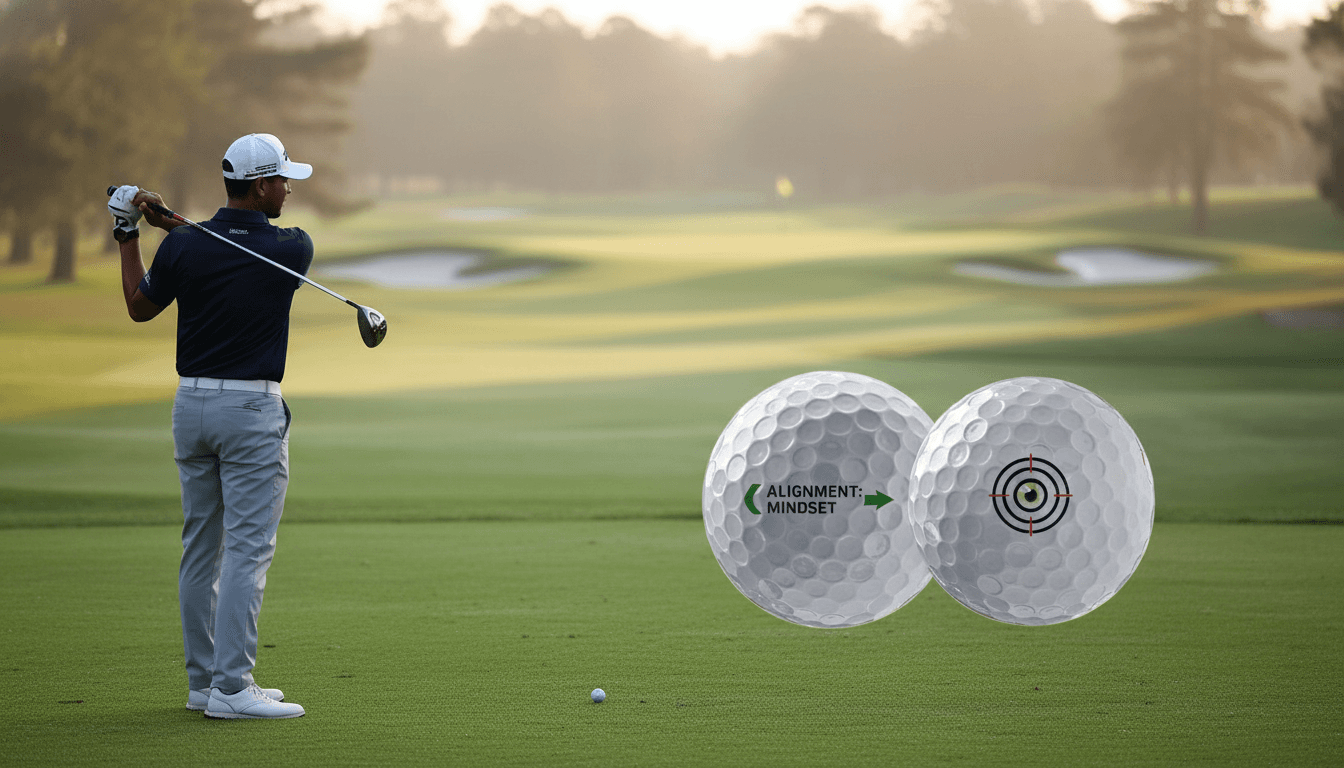
There's a moment on every first tee that separates the dreamers from the scorers. It happens in the seconds before takeaway, when your mind either settles into crystalline focus or scatters like morning mist over a water hazard. Bridgestone believes they've found a way to capture that focus and print it directly on a golf ball.
A Skeptic's Journey to the MindSet
I'll confess something that might surprise regular readers: I'm deeply suspicious of anything marketed as "mental strategy assistance" in golf. I've walked fairways from the windswept links of Scotland to the lush corridors of Augusta National, and I've always believed that mental clarity comes from within—not from graphics printed on equipment.
When Bridgestone sent over boxes of their 2026 Tour B series with the MindSet graphic, I nearly set them aside. I'm the type of player who prefers a pristine white surface facing up, unmarked and uncomplicated. The MindSet, developed in collaboration with Jason Day, seemed designed for someone else entirely.
But Day is one of those players whose equipment choices I've followed for years. When someone who has scaled the heights of world golf puts his name behind something, it warrants genuine investigation. So I took the MindSet balls to the course with low expectations and an open mind.
The Three-Step Process That Actually Works
The MindSet system distills pre-shot routine into three visual cues. What struck me wasn't their sophistication—it was their simplicity, and how that simplicity forced genuine engagement.
Step One: Identify Your Target
The larger red circle represents this first prompt, and here's where I discovered something unexpected about my own game. For years, I thought I was picking targets. Standing on tee boxes across four continents, I'd tell myself I was aiming at the fairway. But "the fairway" isn't a target—it's a general vicinity.
Using the MindSet as a genuine prompt rather than decoration, I found myself getting specific. Not "the right side of the fairway" but "the second-to-last mowing line." Not "toward the flag" but "the shadow edge just left of the pin." The precision felt almost uncomfortable at first, like speaking a more demanding dialect of a language I thought I'd mastered.
Step Two: Visualize Your Shot Path
This is where the MindSet earns its keep for players who struggle with commitment. Visualization isn't new—every sports psychologist preaches it—but having a physical prompt ensures you actually do it rather than rushing through setup. The ball becomes a checkpoint in your routine.
Step Three: Execute with Confidence
The final prompt asks you to commit fully to what you've planned. Simple? Absolutely. Revolutionary? No. Effective? Surprisingly, yes.
Why Reminders Matter More Than Innovation
Here's the honest revelation from my testing: I don't need the MindSet to remember these steps. Every experienced golfer knows they should pick specific targets, visualize ball flight, and commit to their swing. The question isn't knowledge—it's execution.
Without visual cues, I'll remember to do this properly perhaps sixty percent of the time. With the MindSet graphic staring up at me before every shot, that percentage climbs toward one hundred. The ball becomes an accountability partner, a quiet voice asking: Did you actually do the work, or are you about to hit and hope?
This won't transform a twenty-handicapper into a scratch player. But for golfers who know their mental game is costing them strokes—and who among us doesn't fit that description?—the MindSet offers a tangible anchor for practices we already know we should be doing.
The Takeaway
- Bridgestone's MindSet visual aid works not through magic but through consistent reminders that enforce proper pre-shot routine
- The three-step process—target, visualize, execute—represents fundamental mental skills that most golfers inconsistently apply
- Jason Day's collaboration brings credibility and real-world tour testing to the concept
- Skeptics like myself may find the system more valuable than expected, precisely because it addresses the gap between knowing and doing
Sometimes the most powerful golf innovations aren't about physics or materials at all. Sometimes they're simply about making us do what we already know we should.
21+ | Please gamble responsibly. If you or someone you know has a gambling problem, call 1-800-522-4700 (NCPG) or 1-800-GAMBLER.