Rodeo Dunes: Bill Coore's Colorado Masterpiece Hides in Plain Sight
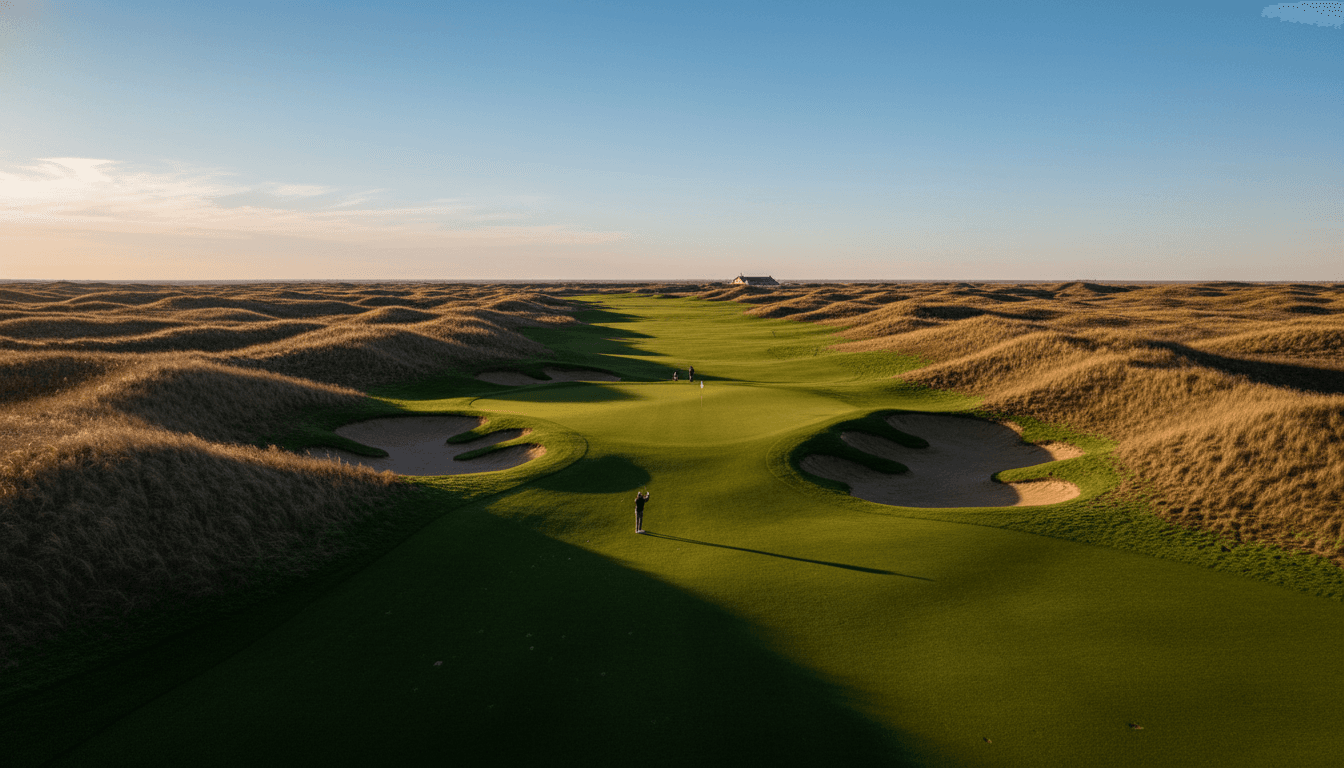
There's a particular magic to golf courses that make you forget the world exists—places where the rumble of the highway dissolves into wind-whispered prairie grass, where the horizon stretches so far it bends. Rodeo Dunes, which opened its full 18 holes this week in Colorado's high plains, is one of those places. The twist? You can be on the first tee within half an hour of stepping off a plane at Denver International.
A Trespassing Story Worth Telling
Every great golf course has an origin myth, and Rodeo Dunes delivers one that feels pulled from a Western novel. In the winter of 2019, Michael Keiser Jr.—son of the visionary behind Bandon Dunes and co-developer of Sand Valley—spotted promising terrain on Google Maps. He flew out from Wisconsin, hopped a fence, and promptly found himself face-to-face with a ranch hand on horseback who suggested, with characteristic plains directness, that he might try knocking next time.
That encounter introduced Keiser to the Cervi family, rodeo pioneers who've worked this land since Colorado achieved statehood. What followed were years of patient negotiation, eventually producing a partnership that gave Keiser the canvas he craved and the Cervis a stake in the vision rising from their ancestral ground.
Bill Coore's Light Touch on Rolling Terrain
Keiser brought in Bill Coore of Coore & Crenshaw, and standing on the property, you understand instantly why. This is rumpled former ranch land—sand-based, undulating, begging for golf to be discovered rather than imposed. Coore obliged with his signature philosophy: wide corridors off the tee that reward strategy over brute force, beautifully contoured putting surfaces, and dramatic blowout bunkers that frame holes without overwhelming them.
The greens are ringed with furrowed brows and subtle runoffs that complicate approaches in the most delicious way. You'll find yourself contemplating bump-and-run recoveries from positions where other courses would offer only the wedge. This is thinking golf, and it's magnificent.
Holes That Demand Attention
Several holes announced themselves to me immediately upon review of the routing:
- The 4th hole — A split-fairway par-4 where the aggressive line tempts with shorter approach but threatens with a deep fairway bunker. Choose your adventure.
- The 14th hole — A short par-3 with its green nestled into a natural bowl, the kind of hole that looks simple until the wind picks up and your depth perception betrays you.
- The 17th hole — A drivable par-4 for those bold enough to challenge the cavernous bunker lurking short and left. Risk and reward distilled to its essence.
What's There Now—And What's Coming
Let me set expectations appropriately: Rodeo Dunes is still a construction site that happens to have exceptional golf. The pro shop operates from a trailer. The clubhouse, restaurant, and lodging remain on the drawing board. On opening day, earthmovers worked the terrain that will become a second course, this one designed by longtime Coore associate Jim Craig.
Keiser isn't apologizing for the spartan amenities. The energy and investment are flowing into what matters most right now—the golf itself. It's a philosophy I respect deeply. Too many developments chase luxury trappings while the course suffers. Here, priorities are properly ordered.
For 2026, most tee times belong to founding members whose investments are funding the build-out. The course opens fully to the public next year.
The Takeaway
Rodeo Dunes represents something genuinely rare: destination-quality golf without the destination-level travel headaches. You get the snow-capped Rockies on the horizon, the prairie wind in your face, the profound silence of open land—all within a rideshare of a major hub airport. When those public tee times open in 2027, this belongs on your list. Pack layers, bring your imagination, and prepare to lose yourself in a landscape that feels wonderfully, impossibly remote.
21+ | Please gamble responsibly. If you or someone you know has a gambling problem, call 1-800-522-4700 (NCPG) or 1-800-GAMBLER.