The World's Best Disabled Golfer Speaks Out as G4D Tour Goes Cold
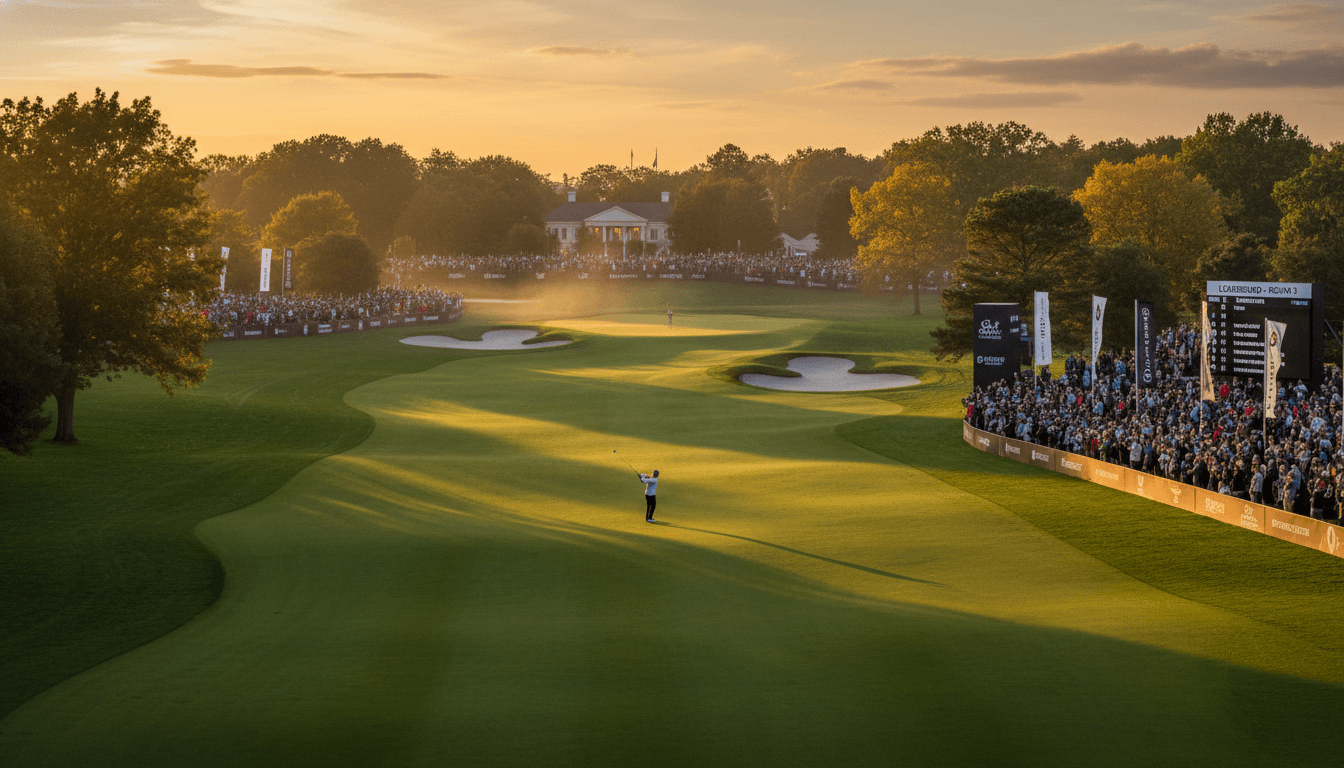
There's a particular quality to watching someone play golf who has had to fight harder than most just to swing a club. I've witnessed it at adaptive events across three continents, and every time, the same thought arrives: this is what the game is actually about. Not the sponsorship logos or the private jets, but the stubborn human insistence on playing despite everything.
Which is why the news from the DP World Tour lands with such a hollow thud. The G4D Tour—a circuit that brought disabled golfers together for competitive events between 2022 and 2025—has been placed into cold storage. And Kipp Popert, the 27-year-old Englishman who sits atop the disabled world rankings, is not content to let that happen quietly.
A Voice for Opportunity
Popert uses one word more than any other when he speaks about disability golf: "opportunity." It's not a buzzword for him. It's the entire architecture of what he's trying to build—a pathway that allows the best disabled golfers in the world to compete regularly, to earn a living, to become the faces that inspire the next generation.
"In order for kids to see the future and to have inspiration on the tough days, the best players in the world need to be able to play regularly for a living," Popert says. "That's what the DP World Tour set out to achieve and we are all really grateful to them. It is just a shame that the sport at the moment has stopped."
Those words carry weight when you consider the contrast. This week, while Popert competes at the G4D Open at Celtic Manor alongside 80 golfers with disabilities, the US PGA Championship unfolds thousands of miles away in Pennsylvania. Last year, Scottie Scheffler walked away from that major with $3.4 million. The G4D Open doesn't offer prize money at all.
The Performance Problem
What strikes me most about Popert's argument is its clarity. He doesn't rage against the system. He simply points out the economics of inspiration.
"Performance sells sport," he explains. "When you look at male or female able-bodied sports, it is the elite side of it that creates opportunities at grassroots. The narrative of inclusivity is amazing but there needs to be an understanding that bringing the best players together is what brings a wow factor and hopefully sponsorship."
He's right, of course. We don't fall in love with golf because of participation statistics. We fall in love because we watch someone do something extraordinary with a club and ball, and some part of us thinks: maybe I could chase that feeling too. Without elite competition, without regular platforms for the world's best disabled golfers to showcase their abilities, the pipeline runs dry.
What Comes Next
The DP World Tour hasn't abandoned disabled golf entirely. A spokesperson confirmed they're focusing on two major events: the annual G4D Open (run in partnership with the R&A) and a new G4D match planned for the 2027 Ryder Cup. They've also pointed to discussions with EDGA, the International Golf Federation, and the R&A about a new structure—one that could potentially help golf enter the Paralympics.
"We established the G4D Tour to grow participation and are proud of the fact that today, the numbers of golfers with a disability playing our sport competitively has grown significantly," the spokesperson said. "G4D is now entering a new chapter with a wider range of stakeholders creating events."
A new chapter. It's the kind of phrase that can mean anything or nothing. And that ambiguity is precisely what troubles Popert and players like him. A handful of showcase events is not the same as a tour. Visibility once or twice a year is not the same as a career.
The View from Celtic Manor
I've walked Celtic Manor's fairways before, felt the Welsh wind cut sideways across the Severn Estuary. It's a proper venue, one that hosted the Ryder Cup in 2010 and understands how to stage golf that matters. That the G4D Open is being held there speaks to the potential of what this could be—if the infrastructure existed to support it year-round.
For now, Popert will play his rounds this week, represent his sport at its highest level, and continue advocating for what seems like such an obvious truth: elite athletes need elite platforms. Disabled or not, the logic doesn't change.
Key Takeaways
- The G4D Tour has been paused after running events for disabled golfers from 2022 to 2025
- Kipp Popert, the world's No. 1 disabled golfer, argues that elite competition is essential for inspiring grassroots participation
- The G4D Open at Celtic Manor this week offers no prize money, contrasting sharply with major championship purses
- Future plans include a G4D match at the 2027 Ryder Cup and ongoing discussions about Paralympic inclusion