The Desert Mirage: Is LIV Golf's Lavish Experiment Finally Fading?
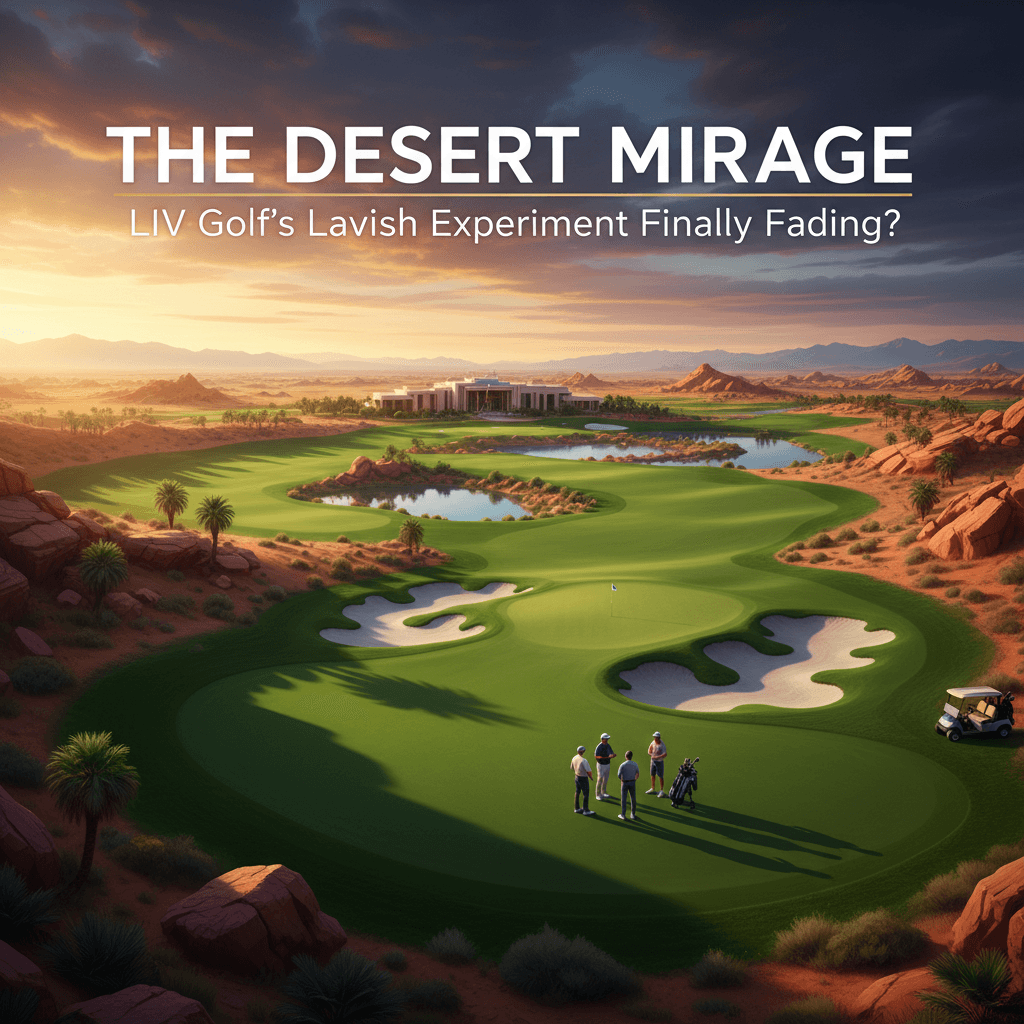
I've walked the grounds at LIV events. I've felt the peculiar energy of those shotgun starts, watched galleries trying to figure out who to follow when everyone tees off at once, and marveled at the sheer audacity of building a golf tour from scratch with seemingly bottomless pockets. Now, those pockets appear to have bottoms after all.
A Meeting in New York, Whispers in Augusta
The golf world runs on rumors the way Augusta National runs on azaleas—they're everywhere, and they bloom at the most dramatic moments. This week, those whispers reached a crescendo when LIV executives arrived late to their own event in Mexico City, having been summoned to an urgent meeting in New York.
The uncertainty had actually begun brewing at the Masters, where conversations in hospitality tents and practice-range sidelines carried an edge of anxiety. By Tuesday evening, speculation exploded on social media that LIV Golf might be shut down entirely. Tour officials declined to comment, which in my experience covering golf courses and the people who play them, is rarely a sign of good news.
The Numbers Tell a Story
Saudi Arabia's Public Investment Fund has poured over $5 billion into LIV since its 2021 launch. That's a staggering sum—enough to build dozens of world-class golf courses, enough to fund generations of junior golf programs, enough to make even the most extravagant resort developer blush.
But money, as we're learning, has its limits even when it comes from sovereign wealth funds. Prize money and bonus payments have already been reduced significantly this season. The stars who were lured with guaranteed contracts—Phil Mickelson, Dustin Johnson, Jon Rahm, Sergio García, Bryson DeChambeau—represented an all-in bet on disruption. Some of those chips are now being cashed out: Brooks Koepka and Patrick Reed have returned to the PGA Tour this year, while DeChambeau has reportedly refused to sign a new deal.
A Kingdom Looks Homeward
PIF released details of a new five-year economic strategy this week, and it reads like a pivot rather than an expansion. The emphasis now falls on sustainable investment delivering financial and infrastructure returns domestically. That's a marked departure from the free-spending internationalism that LIV embodied.
More telling: sport wasn't mentioned among the seven key investment areas in the document, which was signed by Crown Prince Mohammed bin Salman himself. A source who has worked with the Saudi Ministry of Sports told reporters that PIF is now focusing its sports budget on football and esports, with golf no longer a priority.
The Women's Tennis Association is feeling similar winds. PIF's three-year deal to host the WTA finals in Riyadh will not be extended after it expires in November.
The Framework That Never Built Anything
Three years ago, LIV and the PGA Tour signed a so-called "framework agreement" that was supposed to end the civil war tearing through professional golf. It didn't. The merger never materialized. The standoff continued. And now PIF apparently wants to cut its losses.
The sixth event of LIV's fifth season will proceed as planned in Mexico City on Thursday, but the atmosphere will be strange. Players teeing it up while reading headlines about their tour's potential demise. Caddies wondering about their next paycheck. Fans—and yes, LIV has developed genuine fans—uncertain if they're watching the beginning of the end.
What It Means for the Game
I've always believed that competition makes golf courses better. The best layouts emerge when architects push each other, when tournaments demand excellence, when money flows toward quality. LIV's disruption, whatever you thought of its methods or motives, forced the PGA Tour to improve player compensation and rethink its model.
If LIV fades, the landscape shifts again. The PGA Tour regains its monopoly on elite men's golf outside the majors. Players who bet on the rebel tour may find themselves navigating uncertain paths back. And the sport loses an experiment that, for all its controversies, at least asked interesting questions about how professional golf should operate.
The Takeaway
Golf has survived wars, depressions, and countless predictions of its demise. It will survive this too. But the potential unwinding of LIV Golf reminds us that even the most lavish investments can evaporate when priorities shift. The courses will remain. The game endures. The kingdom is simply looking elsewhere.