The Secret Weapon Pros Use to Decode Shinnecock's Devilish Greens
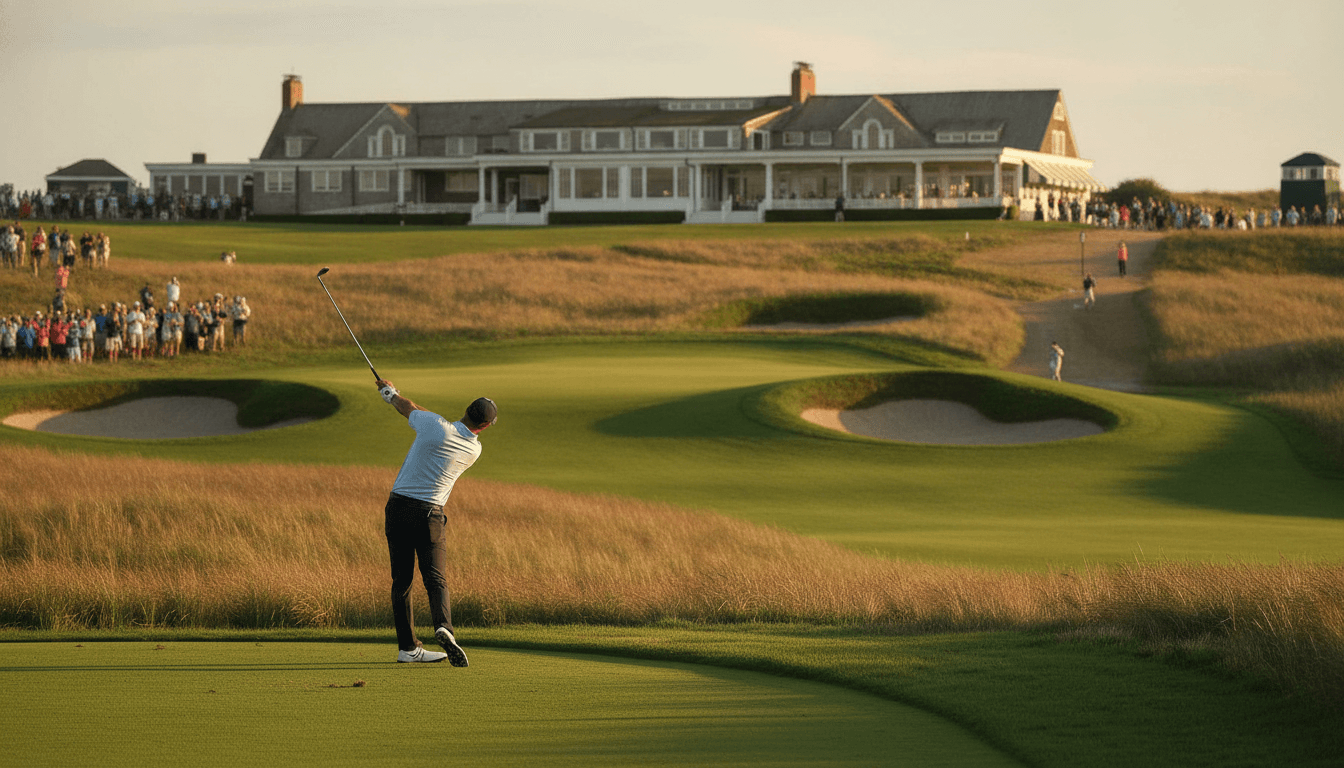
There's something almost magical about standing on the first tee at Shinnecock Hills. The wind carries salt from the Atlantic, the fescue whispers warnings, and those crowned greens gleam in the distance like emerald puzzles waiting to humble even the finest players in the world. I've walked this ground before, felt its challenges beneath my feet, and I can tell you — no amount of practice rounds fully prepares you for what Shinnecock becomes when the USGA sets it up for a U.S. Open.
When Practice Rounds Aren't Enough
The numbers from Saturday's third round tell the story of a golf course that transformed overnight. After 36 players broke par during the first two days, only two managed it on Moving Day. The firm greens, the relentless wind, the crowned putting surfaces with their treacherous runoff areas — Shinnecock revealed its true championship character.
So how do the world's best prepare for conditions they can't fully replicate in practice? They watch television.
It sounds almost too simple, doesn't it? But Keith Mitchell, who posted the third-best round of the day with an even-par 70, explained the logic perfectly. He called the broadcast "the perfect example" of why players should tune in before their rounds.
"You can see where the pins are, how the ball is reacting when it lands on the green to those pins," Mitchell said. He's sitting tied for sixth, seven shots behind 54-hole leader Wyndham Clark, and clearly his homework is paying dividends.
Big Greens That Play Small
What struck me about Mitchell's explanation was his observation about Shinnecock's deceptive putting surfaces. "These greens are big but they're effectively small," he noted. "The square footages are deceiving because there's so many slopes and false fronts."
Anyone who's played a Donald Ross-influenced design understands this concept intimately. The green complex looks generous from the fairway, but the actual landing zones — the spots where a ball can hold and stay near the pin — shrink dramatically once you account for the contours.
By watching the broadcast, players gain intelligence they simply can't acquire any other way. They see exactly where competitors are landing approach shots, how those balls react on contact, and whether players can recover from short-sided misses. It's reconnaissance in real time.
Saturday Morning's Brutal Preview
Emiliano Grillo took full advantage of this strategy. With a 10:33 a.m. tee time and eight pairings ahead of him, he had the luxury of watching the carnage unfold from the clubhouse.
The opening act was harrowing. Dylan Wu, the first player out, five-putted the first hole en route to quadruple bogey. Chris Gotterup had to back away from his ball multiple times on that same green — his marked ball moved roughly 12 to 15 feet before someone could grab it.
"There's a couple TVs in the locker room; dining there's like six TVs — it's hard to miss it," Grillo explained. "You want to be aware of what's going on and how it's playing to kind of have an idea of what's happening out there."
The intelligence paid off handsomely. Grillo fired a 67, the low round of the day. Only Scottie Scheffler joined him under par, shooting 69.
Scheffler's Sunday Stakes
Scheffler, six shots back heading into the final round, plans to continue the surveillance approach on Sunday. The stakes couldn't be higher — it's his first genuine chance to complete the career Grand Slam, and it happens to fall on both Father's Day and his 30th birthday.
He tees off alongside Clark at 2:30 p.m. ET. You can be certain he'll have the broadcast on beforehand, taking mental notes on pin positions and green speeds while the early groups brave whatever Shinnecock decides to throw at them.
The Takeaway
What works for Tour professionals at Shinnecock works for the rest of us too. Before your next round at an unfamiliar course — especially one with demanding greens — seek out whatever visual intelligence you can find. Course videos, flyovers, even watching others play the opening holes before your tee time can provide invaluable insight. Golf is a game of information, and sometimes the smartest preparation happens in front of a screen.