Finding Your Sweet Spot: Fairway Woods vs. Hybrids for Slower Swings
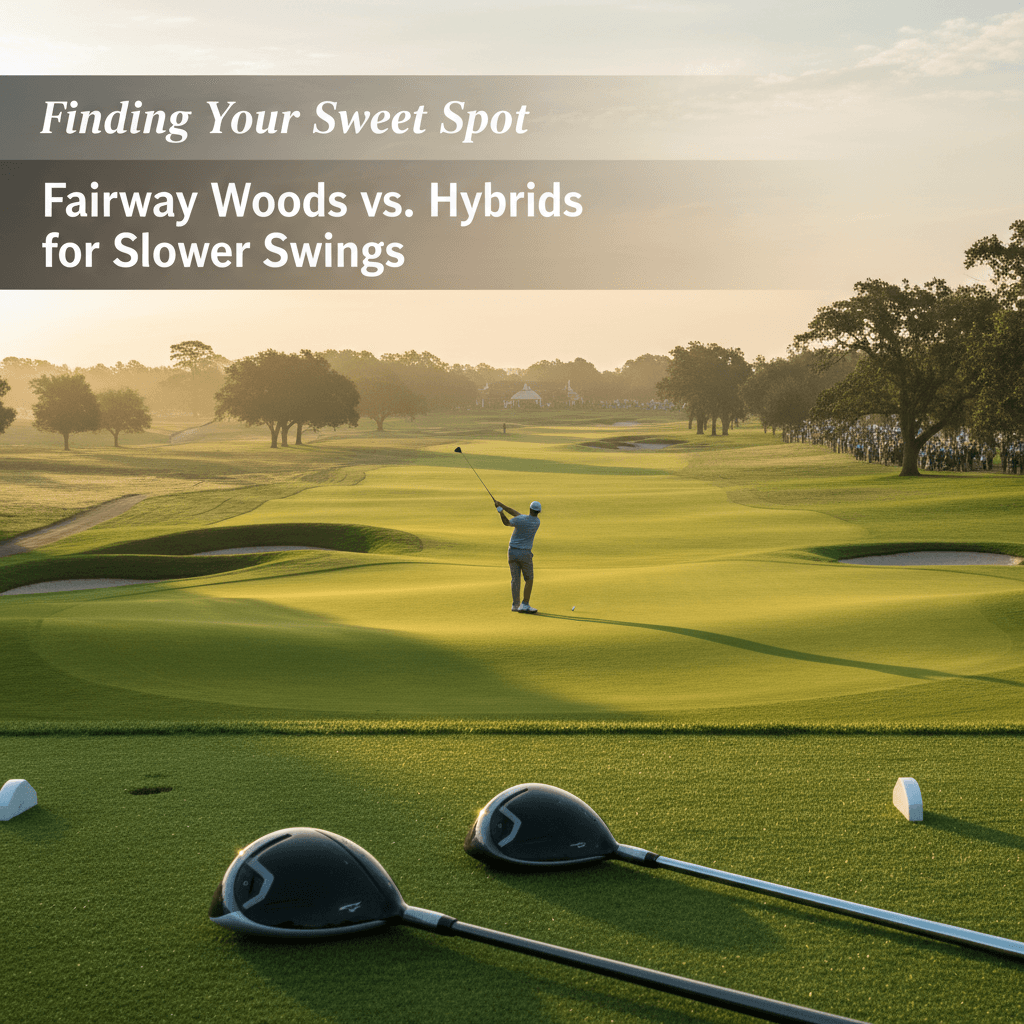
There's a particular sound I've come to love over years of walking courses with players of all abilities—the clean, satisfying click of a well-struck hybrid sailing toward a distant green. It's different from the fuller whoosh of a fairway wood, and for many golfers I've played alongside, it's become the sound of confidence restored.
The ongoing conversation in golf forums about fairway woods versus hybrids for slower swing speed players resonates deeply with me. It's not an academic question—it's the difference between reaching that par-5 in three or four, between walking off the 18th with a smile or a sigh.
The Real-World Challenge
For players swinging around 75 MPH—a common speed among senior golfers and many recreational players—traditional fairway woods can feel like trying to start a fire with damp matches. The clubhead simply doesn't move fast enough to consistently compress the ball and launch it with the trajectory these clubs were designed to produce.
I remember playing a stunning autumn round at a links-style course in Oregon with a gentleman named Harold, who'd been fighting his 5-wood for years. "I know what I'm supposed to do with it," he told me on the 7th tee. "I just can't make it do what it's supposed to do." That sentiment echoes through countless clubhouses across America.
The Hybrid Advantage for Moderate Speeds
Hybrids emerged as the great equalizer in golf equipment, and their benefits become even more pronounced at slower swing speeds. The shorter shaft length provides more control and consistency at impact. The lower, deeper center of gravity helps get the ball airborne without requiring the raw power a fairway wood demands.
What I've observed on hundreds of rounds: players with moderate swing speeds tend to find their most reliable distance with hybrids in the 3H through 5H range. The forgiveness on off-center strikes means those slight mishits that would have dribbled 140 yards with a fairway wood instead travel 160 or more with a hybrid.
But Fairway Woods Have Their Place
Don't discount fairway woods entirely. Higher-lofted options—7-woods and 9-woods—deserve serious consideration for slower swing speed players. These clubs offer more loft than their lower-numbered siblings, making them easier to launch. A 7-wood, with its typically 21-22 degrees of loft, can become a scoring weapon from the fairway and even light rough.
I've seen players find tremendous success with what I call the "bracket approach"—replacing the traditional 3-wood and 5-wood with a 7-wood and 9-wood, essentially shifting the entire fairway wood category up in loft. The distance gaps work out more favorably for moderate swing speeds, and the confidence boost is immediate.
Building the Right Combination
The truth, as with most things in golf, is that this isn't an either/or proposition. The most successful slower swing speed players I've walked with have embraced both categories thoughtfully.
Consider this progression:
- A high-lofted fairway wood (7-wood or 9-wood) for tee shots on shorter par-4s and long par-3s
- A 4-hybrid or 5-hybrid as your primary approach club from 160-180 yards
- A 6-hybrid or 7-hybrid to replace your longest, least-used irons
The goal isn't to match what tour players carry—it's to fill your bag with clubs that perform consistently at your swing speed.
The Fitting Imperative
If there's one universal truth I've encountered, it's that shaft selection matters enormously for slower swing speed players. Regular flex shafts, graphite construction, and appropriate swing weight can transform a club from frustrating to faithful. A quality fitting session, even at a local golf shop, can reveal combinations you'd never have considered.
The Takeaway
For golfers swinging around 75 MPH, hybrids offer immediate benefits in terms of launch, forgiveness, and confidence. But higher-lofted fairway woods—those 7-woods and 9-woods often overlooked in pro shops—deserve equal consideration. The best approach is usually a thoughtful blend of both, fitted to your specific swing characteristics. The goal is simple: find the clubs that make you want to pull them from the bag, not the ones that make you hesitate on the tee.