The Sprinkler Head Rule You're Probably Getting Wrong
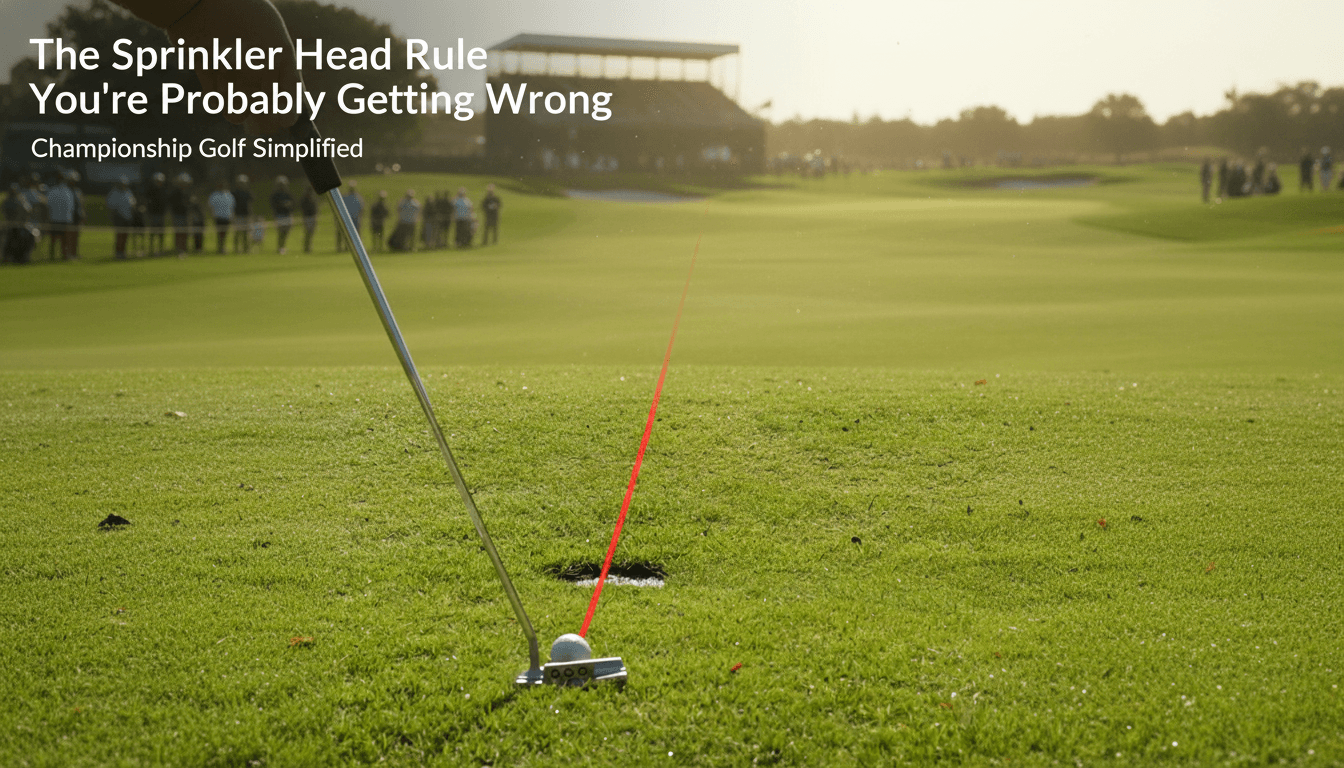
There's a moment in every casual round when someone's ball settles on the fringe, a makeable putt to the flag, and then — there it is. A sprinkler head, sitting squarely in the line. I've watched this scene unfold a hundred times at courses from Bandon to Bethpage, and the response is nearly universal: the player marks the ball, moves it aside, and drops somewhere clear of the obstruction.
It feels right. It looks like relief. But according to the Rules of Golf, it's almost certainly illegal — and understanding why reveals something important about how the game's framework actually works.
What the Rule Actually Says
A sprinkler head qualifies as an "Abnormal Course Condition" under Rule 16.1. This is the same category that covers animal holes, ground under repair, and temporary water. The rule grants free relief when the condition interferes with your play — but the definition of interference is narrower than most golfers assume.
To claim relief from an immovable obstruction like a sprinkler head when your ball lies off the putting green, you need physical interference. That means one of three things must be true:
- Your ball touches or lies in the abnormal course condition
- The condition interferes with your area of intended stance
- The condition interferes with your area of intended swing
Notice what's missing? Line of play. When you're standing on the fringe with a clear stance and a clear swing, but the sprinkler head happens to sit between your ball and the hole, you have no grounds for free relief. The obstruction might be annoying. It might force you to chip instead of putt. But under the standard Rules of Golf, you play it as it lies.
Why This Trips Up So Many Golfers
The confusion stems from a reasonable instinct: if something artificial is affecting my shot, the rules should protect me. And on the putting green itself, they do — line of play interference does grant relief when your ball is on the putting surface. But the fringe is not the green. It's part of the general area, and the relief standards are different.
I've seen this misunderstanding cost strokes in club championships and friendly matches alike. It's the kind of rule that everyone "knows" until they actually read it. The USGA addressed this directly in a February 2026 post, reminding golfers that a sprinkler head in your putting line from off the green "might be distracting, and it might even change the next shot you play, but without physical interference, there is no free relief."
The Local Rule That Changes Everything
Here's where it gets interesting — and where professional golf diverges from your Saturday fourball. Many tournaments, including those on the PGA Tour, adopt Local Rule F-5. This optional rule acknowledges a practical reality: when fringe areas are cut low enough that putting from off the green becomes a common play, immovable obstructions near the putting surface can unfairly penalize that choice.
Under Local Rule F-5, if an immovable obstruction close to the putting green lies on your line of play and your ball is in the general area, you're granted an extra relief option beyond the standard Rule 16.1. In plain terms: that sprinkler head in your putting line would entitle you to relief — but only if the local rule is in effect.
This is exactly why Tour players sometimes appear to get relief that wouldn't be available in your regular round. They're not playing by different rules — they're playing with different local rules adopted by the tournament committee.
What This Means for Your Game
If you play competitive golf at any level, knowing whether Local Rule F-5 is in effect matters. Check the scorecard, the notice board, or ask the pro shop before your round. In most casual play, the local rule won't be adopted, meaning you'll need to play around that sprinkler head — or over it, or chip past it — without relief.
And in a friendly match? Establish the ground rules on the first tee. If everyone agrees to play F-5, fine. But if someone assumes relief is automatic and their opponent knows better, you've got a dispute waiting to happen on the 14th hole.
Key Takeaways
- Off the green, line of play interference does not grant relief — you need physical interference with your ball, stance, or swing
- Local Rule F-5 can change this — check whether your course or tournament has adopted it
- When in doubt, play it as it lies — and know the rule before you pick up that ball