Bettinardi's Heel-Shafted Antidote Putters: A Turning Point for Zero-Torque Design
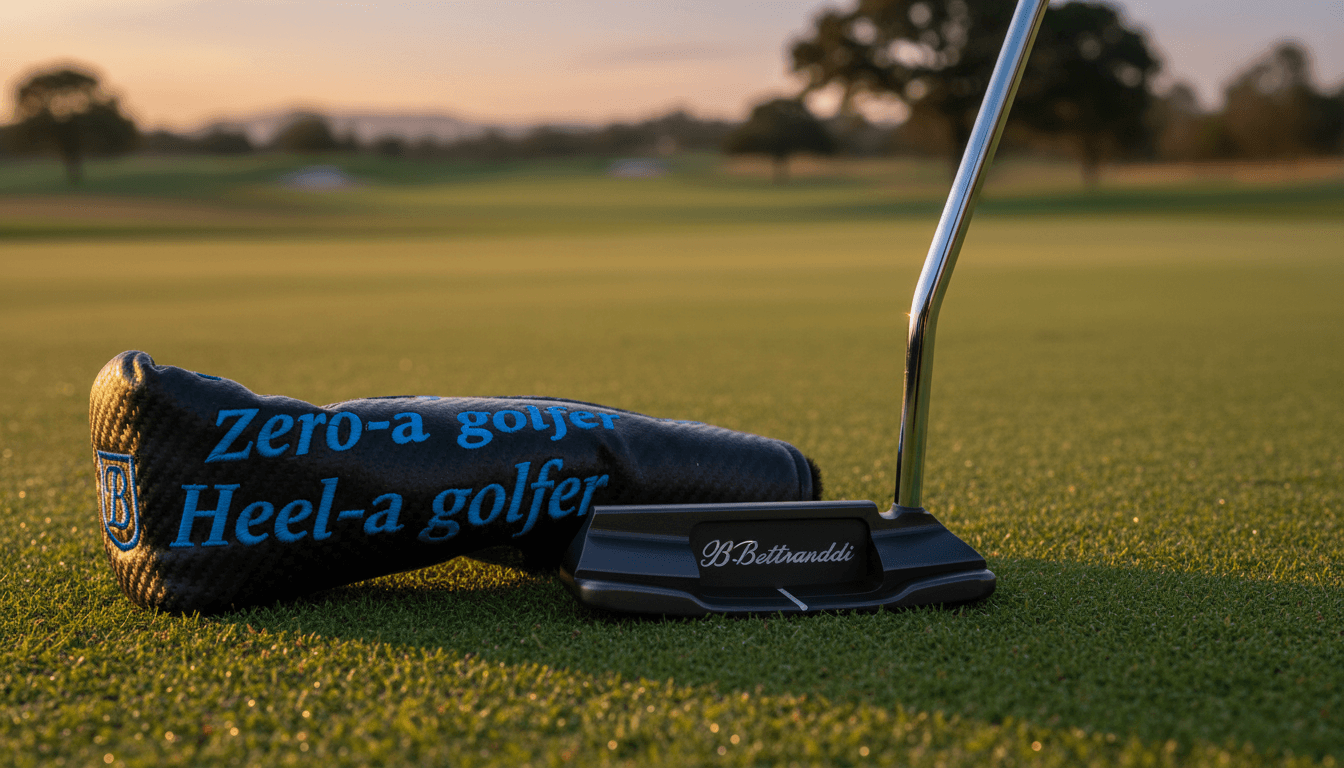
There's something almost sacred about the view down at address. The way a putter sits behind the ball, the curve of the hosel, the angle of the shaft—these details matter more than most golfers consciously realize. They matter to the way we align, the way we stroke, and honestly, the way we feel about the whole enterprise of coaxing a ball into a hole from four feet.
Which is precisely why Bettinardi's latest announcement carries more weight than a typical product launch. The company has introduced two heel-shafted additions to its Antidote "Zero-Torque" lineup—the Hexperimental #7 and #9—and in doing so, has addressed the single biggest psychological barrier keeping traditional golfers from embracing low-torque technology.
The Center-Shaft Problem Finally Gets Solved
Let me be direct: I've tried center-shafted putters, including several low-torque models. They work. The physics are sound. But every time I looked down, something felt wrong. The shaft entering the middle of the head created a visual disconnect I couldn't quite shake, like wearing someone else's glasses that are technically the right prescription but still give you a headache.
Bettinardi was among the first legacy manufacturers to enter the U.S. low-torque market after L.A.B. Golf, releasing the Antidote SB1 and SB2 back in fall 2024. Those putters earned devoted followers, but they required players to accept center-shafted designs. Until now.
The Hexperimental models use a clever long-neck design where the shaft enters the middle of the neck rather than being positioned in front of it like a traditional plumber's neck. This orientation routes the shaft through the center of gravity while preserving the heel-shafted look most golfers grew up trusting. As Sam Bettinardi, the company's president, noted, this opens up zero-torque advantages to players on "a design they are most familiar looking down at."
Two Shapes, Two Different Players
The Hexperimental #7 is a compact mid-mallet featuring a rear window that pushes mass to the perimeter for increased stability. It's the choice for players who want alignment aids and forgiveness but have resisted low-torque technology because they couldn't stomach center-shafted aesthetics.
The Hexperimental #9 takes a different path—a wide-body blade with a high toe and squared-off angles. This is the putter for traditionalists who've spent years with blade-style heads and want to explore zero-torque benefits without abandoning the compact look they trust.
Both models were teased as prototypes on the PGA Tour at the Cognizant Classic earlier this year, which tells you something about Bettinardi's confidence in the engineering. Tour players don't experiment with their flat sticks unless the technology genuinely performs.
Finish and Feel
In a departure from the rest of the Antidote lineup, both Hexperimental putters wear a Black Armour TPT finish on the topline and flange, with distressed blue accents on the face and sole. It's a striking aesthetic—industrial, modern, but not cold.
Like their Antidote siblings, these putters feature Bettinardi's F.I.T. face technology, which removes 30 percent of the face material for what the company describes as a soft and responsive feel at impact. If you've rolled any recent Bettinardi, you know the sensation—feedback that communicates without being harsh.
Why This Matters Beyond the Product
The low-torque putter category has exploded over the past few years, moving from niche curiosity to mainstream consideration. But adoption has been limited by aesthetics as much as by skepticism about the technology itself. Many golfers simply don't want to look down at an unfamiliar configuration, no matter how well the science checks out.
Bettinardi's Hexperimental release suggests the industry has heard this feedback. By engineering zero-torque performance into traditional-looking hosels, they're removing one of the last barriers to entry. I suspect we'll see more manufacturers follow this path.
The Takeaway
The Bettinardi Antidote Hexperimental #7 and #9 represent exactly the kind of thoughtful innovation that moves equipment forward—technology that doesn't demand you abandon what you know, but rather enhances it. For golfers who've watched the low-torque revolution from the sidelines because they couldn't embrace center-shafted designs, the wait is over. Your view at address just got a whole lot more familiar.
These are limited-release models, so if the intersection of traditional aesthetics and modern putting science appeals to you, I wouldn't hesitate.