Ping's Eye-Q Alignment System: Does the Science Actually Add Up?
What Ping's Putting Lab Discovered About Your Eyes
I've tested dozens of putters with various alignment aids over the years — long lines, short lines, triple sightlines, dots, and everything in between. So when Ping announced their new Scottsdale TEC (Tour Elevated Concepts) putter series with something called the "Eye-Q" alignment system, I was genuinely curious whether this was marketing fluff or legitimate science.
According to Ping, their Putting Lab team worked extensively with Tour professionals and dove deep into eye-tracking research. Their conclusion? Quiet eyes equal a more stable putting stroke. It's not a revolutionary concept in sports psychology — the "quiet eye" phenomenon has been studied in everything from basketball free throws to dart throwing — but applying it specifically to putter design through a dedicated alignment feature is a fresh approach.
How the Eye-Q System Actually Works
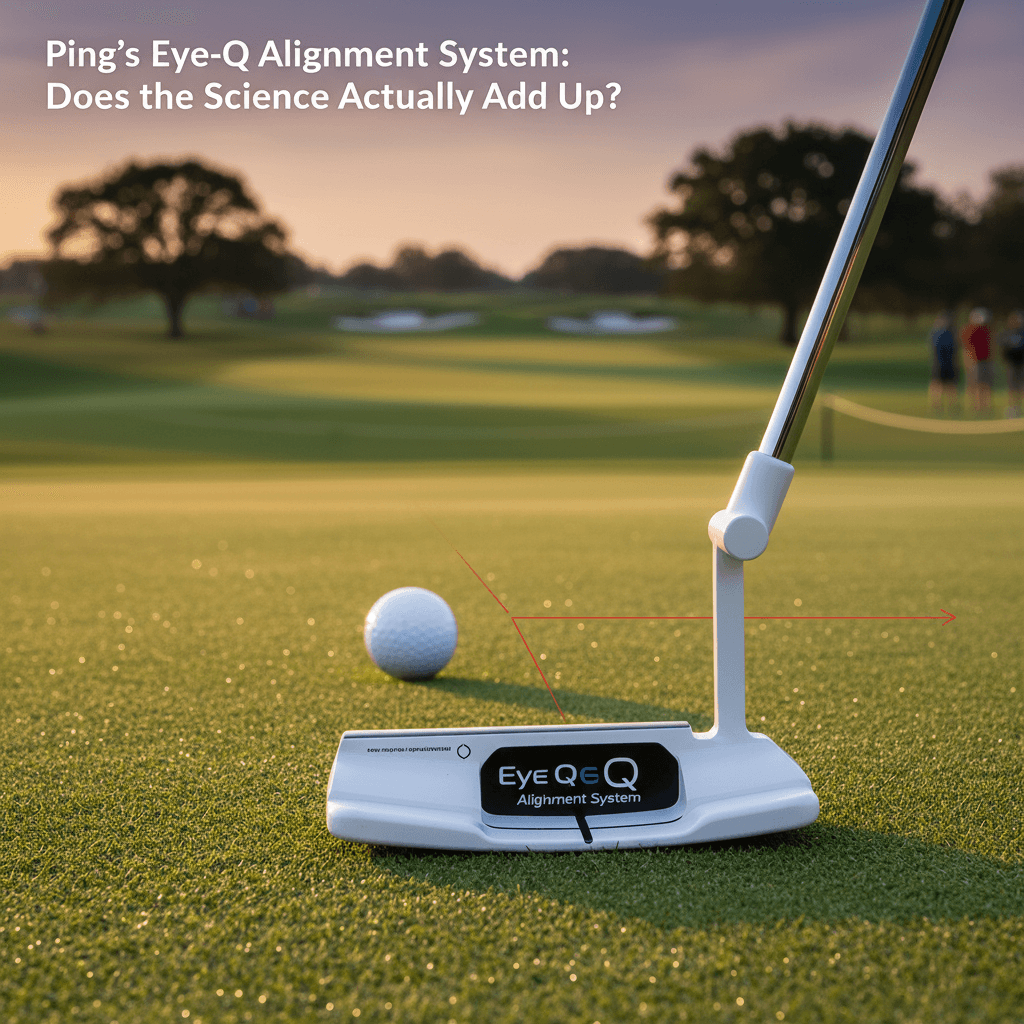
The design itself is elegantly simple. Rather than the typical single alignment line or multiple parallel lines you see on most putters, Ping placed a single dot ahead of a line on the crown. That line leads directly to the sweet spot.
The idea is that you focus your eyes on that dot at address — Ping calls this a "discrete anchor" — rather than letting your gaze wander across the putter head, the ball, and the target line. By giving your eyes a specific, unchanging focal point, your stroke should theoretically become more relaxed and steady through impact.
It's worth noting that this isn't about aiming assistance per se. Traditional alignment lines help you point the putter face correctly. The Eye-Q system is designed to help you execute the stroke once you're already lined up properly. Two different problems, two different solutions.
The Scottsdale TEC Lineup
Ping is rolling out the Eye-Q system across three head shapes in the Scottsdale TEC family:
- Ally Blue — A mallet design with onset hosel
- Ketsch — Their popular high-MOI mallet shape
- Hayden — A more compact option
All three models are priced at $399, which puts them in the premium category alongside other Tour-level putters. That's not cheap, but it's consistent with where the market has moved for high-end flatsticks featuring advanced alignment and face technology.
Does This Actually Help Your Game?
Here's where I have to be honest with you: the science behind quiet-eye training is legitimate. Studies have shown that expert performers in precision sports tend to fixate on a specific target point longer and more steadily than novices. Researchers call this the "quiet eye period," and it correlates with better performance.
Whether a dot on your putter can replicate that benefit is another question. In my experience, alignment aids work best when you trust them completely and commit to using them consistently. If the Eye-Q system gets you to focus on one spot instead of letting your eyes dart around at address, it could genuinely smooth out your stroke.
The challenge is habit formation. If you've spent years looking at the ball or the target line during your putting routine, you'll need to retrain yourself to lock onto that dot. Give it at least a few weeks of dedicated practice before passing judgment.
Who Should Consider These Putters
The Scottsdale TEC line with Eye-Q alignment makes the most sense for golfers who:
- Struggle with tension or jerkiness in their putting stroke
- Have trouble maintaining focus at address
- Are willing to commit to a new pre-stroke routine
- Prefer mallet-style putters with high stability
If you're already rolling it pure with your current setup, switching purely for the Eye-Q feature might not move the needle much. But if you're fighting the yips or just feel like your stroke has too much noise in it, this is worth a serious look.
The Bottom Line
Ping's Eye-Q alignment system isn't just another gimmicky sightline — it's rooted in real eye-tracking research and the well-documented quiet-eye phenomenon. Whether it translates to more made putts for your game depends on your willingness to adopt a new focal routine and commit to it over time. At $399, these Scottsdale TEC putters are premium-priced, but they're offering something genuinely different in a crowded market. If you're struggling with stroke stability, this is technology worth testing on the practice green before you dismiss it.